
Building Human Dignity Through Institutions: Religion, Work, and the Future of Inclusion

On 16 October in London, our Dare to Overcome conversations begins with a simple but profound conviction: technology should serve humanity—not the other way around.


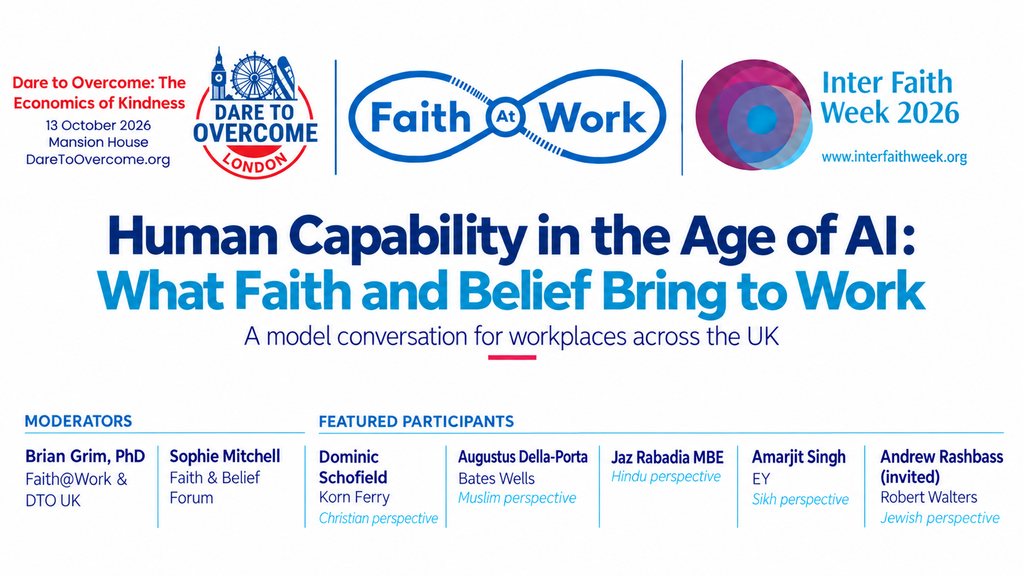
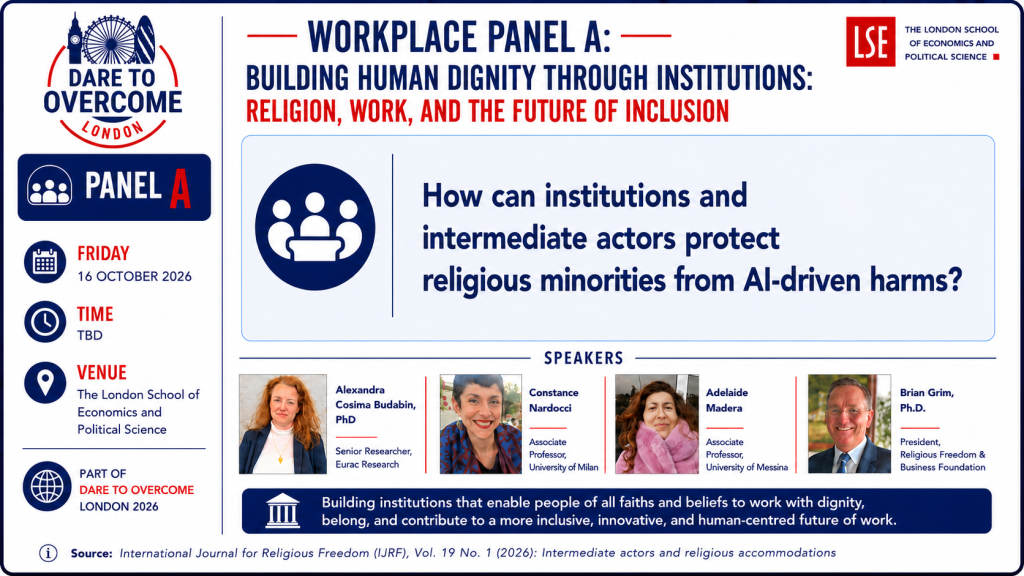
Workplace Panel A: Building Human Dignity Through Institutions: Religion, Work, and the Future of Inclusion

Drawing on a landmark special issue of the International Journal for Religious Freedom, this panel explores how businesses, civil society organizations, employee networks, trade unions, faith communities, and legal advocates serve as “intermediate actors” that translate human dignity and freedom of belief into everyday workplace realities.

The discussion will examine emerging research on religious accommodation, inclusion, and freedom of conscience across Europe, North America, and Africa, including the role of employee resource groups, civil society organizations, faith leaders, and businesses in navigating diversity in increasingly complex workplaces.

As artificial intelligence reshapes organizations and economies, the panel will ask a broader question central to the future of a human-centred world: which institutions and intermediate actors can ensure that technological progress strengthens rather than diminishes human dignity, belonging, and freedom? And how can these entities support religious minorities who may experience AI-derived human rights violations?

Speakers:

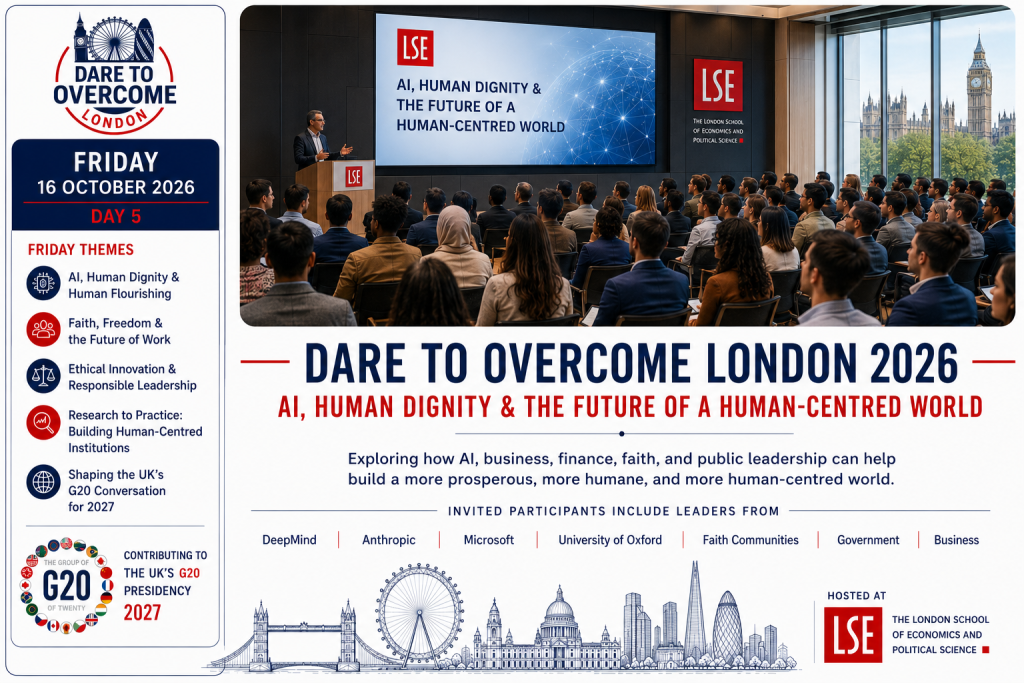
Dare to Overcome London 2026: AI, Human Dignity, and the Future of a Human-Centred World

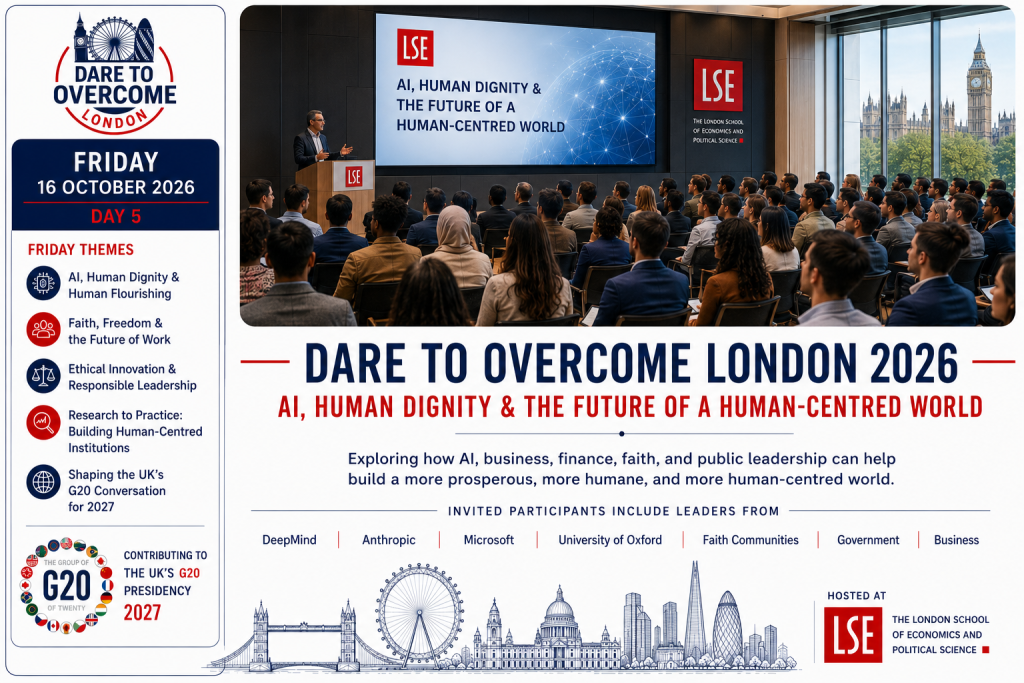
On 16 October 2026, leaders from technology, business, finance, government, academia, and faith communities will gather in London for a timely and ambitious conversation: how can artificial intelligence help build a more prosperous world without losing sight of what makes us human?

As part of the Dare to Overcome London 2026 series, the event “AI, Human Dignity, and the Future of a Human-Centred World” will bring together voices that rarely share the same platform. Hosted at the London School of Economics and Political Science (LSE) and coordinated by Dr. Tomislav Karačić, Assistant Professor of Information Systems in LSE’s Department of Management, the gathering aims to move beyond the familiar debates of technological disruption toward a deeper question: What kind of society are we building, and for whom?

Artificial intelligence is reshaping everything from healthcare and education to finance, employment, and public policy. Yet many of the most pressing questions facing society are not merely technical. They are profoundly human. How can innovation serve human flourishing? What role should ethics, faith, and conscience play in guiding technological development? How can organizations ensure that efficiency does not come at the expense of dignity?

These questions have become increasingly urgent as governments, businesses, and civil society organizations grapple with the opportunities and risks presented by rapidly advancing AI systems.

The October gathering will explore themes including:

  • AI, human dignity, and human flourishing
  • Faith, freedom, and the future of work
  • Ethical innovation and responsible leadership
  • Translating research into practice through human-centred institutions
  • Contributing ideas to the United Kingdom’s G20 Presidency in 2027

What makes this event distinctive is its commitment to interdisciplinary dialogue. Contributors are being invited from leading technology companies, major universities, public policy institutions, and faith communities. The goal is not simply to discuss AI, but to examine how technological progress can advance the common good while respecting the diversity of human beliefs, values, and experiences.

Among the perspectives being explored are questions about how technology companies engage religious communities, what it means to bring one’s faith or worldview into the workplace, and how faith traditions might contribute to broader conversations about AI ethics, governance, and social responsibility.

Dr. Karačić and the organizing team are working to create a forum that combines keynote presentations, panel discussions, and interactive conversations among participants. Rather than generating more heat than light, the emphasis will be on practical insights, thoughtful engagement, and identifying opportunities for collaboration across sectors.

The event also reflects a broader vision behind the Dare to Overcome movement. As artificial intelligence transforms economies and institutions, the challenge is not simply to build more powerful technologies, but to foster a world in which innovation strengthens human relationships, expands opportunity, and promotes human dignity.

The future will be shaped not only by the capabilities of machines, but by the values of the people who design, regulate, deploy, and live alongside them.

On 16 October in London, that conversation begins with a simple but profound conviction: technology should serve humanity—not the other way around.


Dare to Overcome London 2026
Friday, 16 October 2026
London School of Economics and Political Science

Theme: AI, Human Dignity, and the Future of a Human-Centred World

For more information about the Dare to Overcome initiative, visit Dare to Overcome.

UK Parliament Session on AI and Freedom of Religion or Belief, 8 July 2026

FOR IMMEDIATE RELEASE

Faith@Work and Dare to Overcome Convene UK Parliament Session on AI and Freedom of Religion or Belief

London, 8 July 2026 — Faith@Work and Dare to Overcome will convene a Parliamentary Session on AI and Freedom of Religion or Belief on Wednesday, 8 July 2026, from 5:00 to 6:00 PM in Committee Room 20, Houses of Parliament, London.

Hosted by the APPG for Freedom of Religion or Belief, the session will explore the opportunities and risks of artificial intelligence for freedom of religion or belief, human dignity, and human flourishing.

Speakers include Professor Lord Tarassenko CBE FREng FMedSci, President of Reuben College, University of Oxford, and Brian J. Grim, Ph.D., President of the Religious Freedom & Business Foundation and Global Chair of Dare to Overcome.

The session is part of an ongoing Faith@Work and Dare to Overcome series examining the intersection of faith, work, technology, human dignity, and public life. The conversation began at the UK Faith@Work Conference hosted by EY in April, continues now in the UK Parliament, and will develop further at the London School of Economics on 16 October 2026 during Dare to Overcome London 2026.

“As artificial intelligence reshapes workplaces, economies, education, and public life, we must ask not only what technology can do, but what kind of society it should help us build,” said Dr. Brian Grim. “Freedom of religion or belief is central to that question because it protects conscience, dignity, identity, and the human search for meaning.”

The July 8 session will bring together policymakers, faith and business leaders, scholars, and technology experts for a focused discussion on responsible innovation and the future of human-centred society.

Attendance is limited. Email for invitation.

Business Skills, Human Rights, and Human Flourishing: Teaching Freedom of Religion or Belief (FoRB) in India

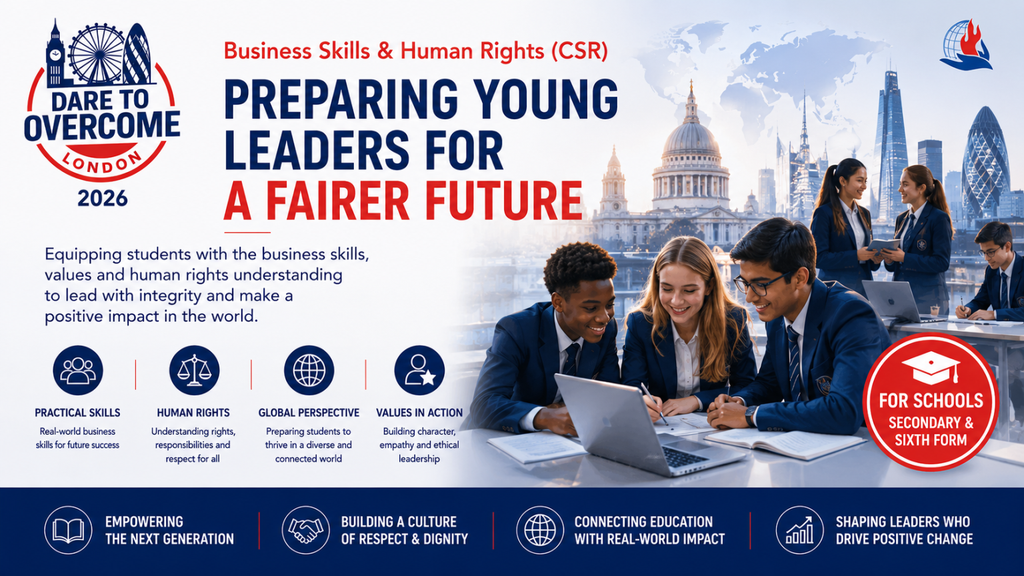
Around the world, educators are increasingly recognizing that preparing young people for the future requires more than academic knowledge alone. Students need practical skills, an understanding of human rights, and the ability to navigate a world marked by diversity, complexity, rapid technological change, and increasing religious and cultural pluralism. In India, the Dare to Overcome Business Skills & Human Rights Curriculum was developed to address this challenge by integrating freedom of religion or belief (FoRB), human rights education, peacebuilding, and practical business skills into a single classroom experience.

“The curriculum is distinctive in its integration of freedom of religion or belief (FoRB), human rights education, peacebuilding, and practical business skills, preparing young people to become future leaders who can advance human dignity, social cohesion, and human flourishing in an increasingly diverse world.”
Brian Grim, Ph.D., Global Chair of Dare to Overcome

The curriculum emerged from the Religious Freedom & Business Foundation’s and Dare to Overcome’s broader work promoting human dignity, social cohesion, and human flourishing through business, education, and peacebuilding. Working in partnership with the MIT World Peace University (MIT-WPU) School of Education in Pune, India, the initiative adapted an existing human rights education resource into a new curriculum that would resonate with schools, students, and teachers while addressing contemporary social and economic realities.

The result was the Dare to Overcome Curriculum: Human Rights, Business Skills & Peace for Secondary School Students. The curriculum was piloted in ten schools in Pune and reached approximately 3,500 students. It was developed and implemented in collaboration with MIT-WPU faculty and student teachers, creating both student-learning and teacher-development outcomes.

What makes the curriculum distinctive is its integration of human rights education with practical business and communication skills. Rather than teaching rights as abstract legal concepts, each lesson pairs a specific human right with a skill that students can immediately apply in their lives. For example, the right to equality is paired with active listening, equal and inalienable rights with collaboration, freedom from discrimination with networking, freedom from bullying with conflict resolution, freedom of religion or belief with curiosity, freedom of expression with verbal communication, and the right to education with resilience.

This approach helps students see that human rights are not simply principles to be memorized but values that can shape relationships, workplaces, communities, and societies.

The curriculum is built around the principle of Unity in Diversity—the idea that human dignity, equal rights, and peaceful coexistence can flourish while respecting differences in religion, belief, culture, language, and background. This principle is especially important in India, one of the world’s most religiously and culturally diverse societies.

Freedom of religion or belief is addressed most directly through lessons connected to Article 18 of the Universal Declaration of Human Rights. However, FoRB is not presented merely as a legal entitlement. Students are encouraged to explore how respect for religious freedom contributes to peaceful coexistence, social trust, and mutual understanding.

A distinctive feature of the curriculum is that FoRB is paired with the business skill of curiosity. Students learn that curiosity is not only a valuable workplace skill but also an important tool for engaging respectfully with people whose beliefs differ from their own. Through guided discussions and activities, students practice asking respectful questions, learning from others, and remaining open to new perspectives.

The curriculum also incorporates principles of Cross-Cultural Religious Literacy, encouraging students to seek understanding rather than agreement, avoid stereotypes, recognize diversity within religious traditions, and reflect on their own assumptions. This approach helps students engage differences constructively while strengthening social cohesion.

Classroom discussions include questions such as: “How can you respect the beliefs of others while practicing your own?” and “What values do most people share regardless of religion or belief?” These conversations help students connect FoRB principles to everyday life and relationships.

Classroom activities are designed to build religious literacy without requiring students to defend, justify, or disclose personal beliefs. Activities such as Religious Freedom Bingo, the Respect-o-Meter, and the Wheel of Peace help students explore different religious traditions, identify shared values, and appreciate diversity in a constructive and non-competitive way. The focus is not on evaluating religions but on understanding difference and cultivating respect.

The curriculum uses a highly participatory methodology. Lessons combine storytelling, songs, discussions, role-play, reflection exercises, games, worksheets, group challenges, and peer learning. Students are regularly encouraged to apply what they learn beyond the classroom through practical challenges and community-oriented activities, then reflect on and report back about their experiences. These real-world application challenges help transform human rights learning from theory into practice.

The curriculum connects strongly with both international and domestic legal frameworks. Students are introduced to the Universal Declaration of Human Rights (UDHR), selected principles from the Convention on the Rights of the Child (CRC), and relevant provisions of the Indian Constitution. Human rights concepts are therefore situated within both global and national frameworks, helping students understand that rights are universal while also finding expression in local legal and cultural contexts.

To support implementation in formal educational settings, the project includes a comprehensive Lesson Plan Manual, an Activity Handbook for Teachers, and teacher-training support developed through the MIT-WPU School of Education partnership. The curriculum was intentionally designed to be adaptable to different cultural and educational contexts while maintaining its core commitment to human dignity, human rights, peacebuilding, and practical skill development.

The longer-term vision extends well beyond the initial pilot. Because the curriculum combines human rights education, practical workplace skills, teacher-training resources, and CSR engagement opportunities, it provides a model that can be adapted for diverse educational settings. The framework was intentionally designed for replication and contextual adaptation, creating opportunities for expansion throughout India and potentially into other countries facing similar challenges related to diversity, inclusion, and social cohesion.

The curriculum also aligns with United Nations Sustainable Development Goal 16: Peace, Justice and Strong Institutions, reflecting a broader commitment to building more peaceful, inclusive, and resilient societies. Through future partnerships with schools, businesses, foundations, and community organizations, Dare to Overcome hopes to expand access to this model and help equip more young people with the skills and values needed to thrive in an interconnected world.

At its heart, the project is based on a simple conviction: young people should be equipped not only with knowledge but also with the skills and values needed to build a more just and flourishing world. By connecting freedom of religion or belief, human rights, peacebuilding, cross-cultural understanding, and practical workplace skills, the Dare to Overcome curriculum offers a new model for preparing young people to lead with competence, character, and compassion. In doing so, it demonstrates how education can help build not only successful careers, but also more peaceful, inclusive, and flourishing societies.

Building Religious Literacy Through Curiosity, Respect, and Understanding.

Upcoming Interfaith Leadership Dialogue: Faith and Leadership in a Changing World

On 17 June, the Institute for the Impact of Faith in Life will host a special interfaith dialogue exploring how faith traditions shape leadership in today’s complex and rapidly changing world. The conversation will bring together distinguished Muslim, Jewish, Christian, and Hindu leaders to discuss the values that inspire ethical decision-making, service, and human flourishing across diverse communities.

Among the featured speakers will be Dr. Brian Grim, President of the Religious Freedom & Business Foundation and Global Chairman of Dare to Overcome, who will share insights on the role of faith, freedom of religion or belief, and business leadership in fostering social cohesion and peace. The discussion will highlight how diverse faith perspectives, while distinct in tradition, often converge around shared commitments to dignity, compassion, integrity, and the common good.

At a time when societies are searching for ways to bridge divides and strengthen trust, this conversation offers a unique opportunity to hear from leaders working at the intersection of faith, leadership, and public life.

Registration is now open, and all are welcome to attend.

You can register your interest in attending here.

Participants include Dr Husna Ahmad (CEO of Global One 2015 and Secretary General of the World Muslim Leadership Forum), Rabbi Alex Goldberg (Rabbi of Guildford, Dean of Religious Life and Belief at the University of Surrey, barrister, and human rights activist), Dr Brian Grim (Founder and President of the Religious Freedom & Business Foundation), and Mayor Tushar Kumar (Mayor of Elstree & Borehamwood). The discussion will be moderated by Professor Andrew Davies, Director of the Edward Cadbury Centre for the Public Understanding of Religion at the University of Birmingham.

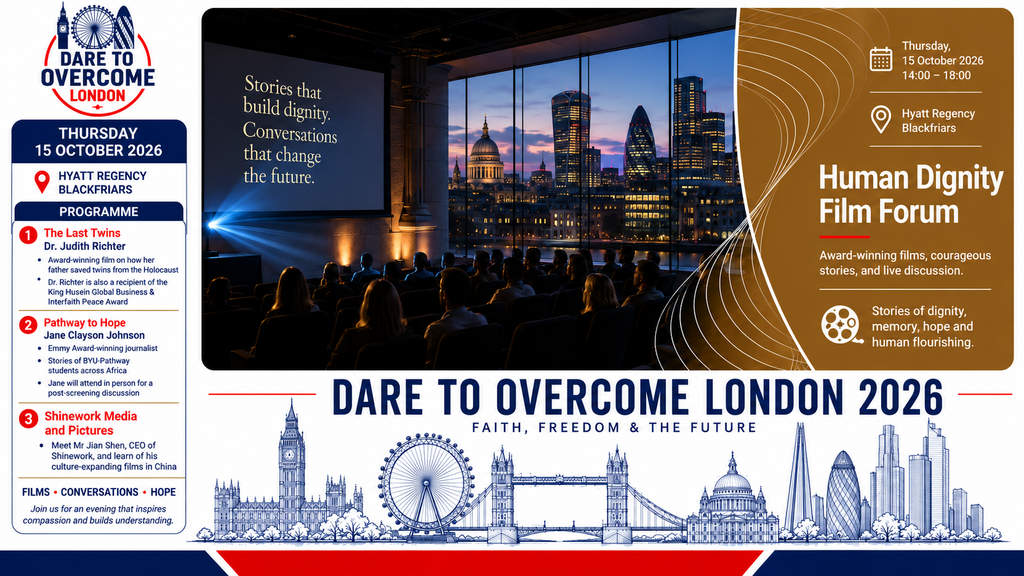
PBS Premieres The Last Twins — A Story of Courage, Humanity, and Hope

A powerful PBS premiere highlights the work of Dr. Judith Richter—2021 Peace Award recipient, bridge-builder, and daughter of a Holocaust hero.

Congratulations to Dr. Judith Richter, recipient of the 2021 King Husein Global Business & Interfaith Peace Award, on the national PBS premiere of The Last Twins on June 15.

The acclaimed documentary tells the remarkable story of Judith’s father, Erno “Zvi” Spiegel, whose courage and compassion helped save dozens of young twins subjected to Josef Mengele’s horrific experiments at Auschwitz. More than a Holocaust story, The Last Twins is a powerful testament to the enduring strength of human dignity and the moral choices that define us even in the darkest times.

Judith’s commitment to advancing human dignity extends far beyond the film. As CEO of Medinol, she founded the NIR School of the Heart, a groundbreaking initiative that brings together Jewish, Muslim, Christian, and Druze high school students from Israel, the Palestinian territories, Egypt and Jordon to learn about cardiovascular medicine while building friendships across cultural, ethnic, and religious divides. Today, the program has graduated more than 800 students, many of whom have gone on to become ambassadors for peace and pursue careers in healthcare. As one graduate reflected, the program “will make the whole Middle East a better place.”

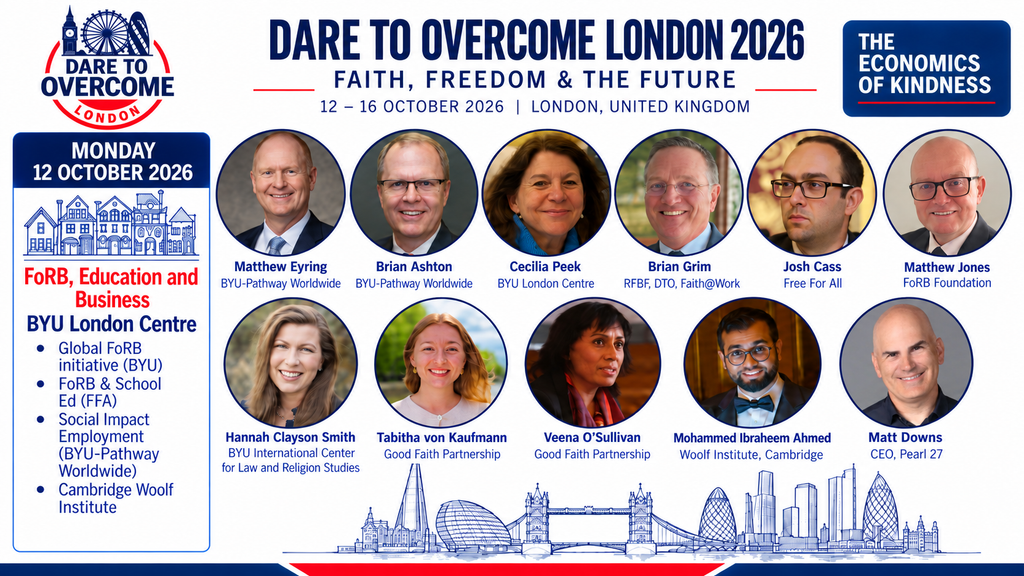
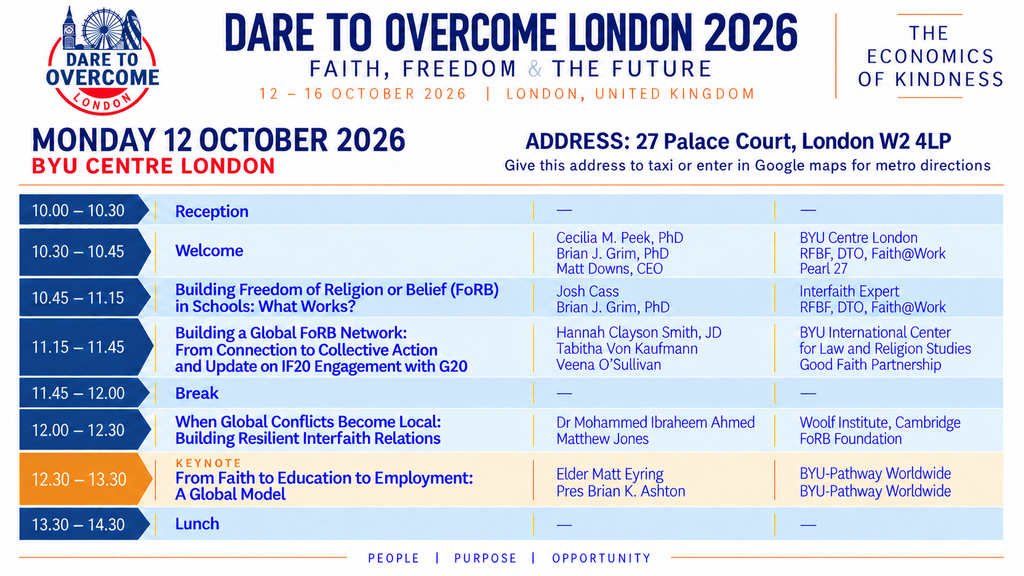
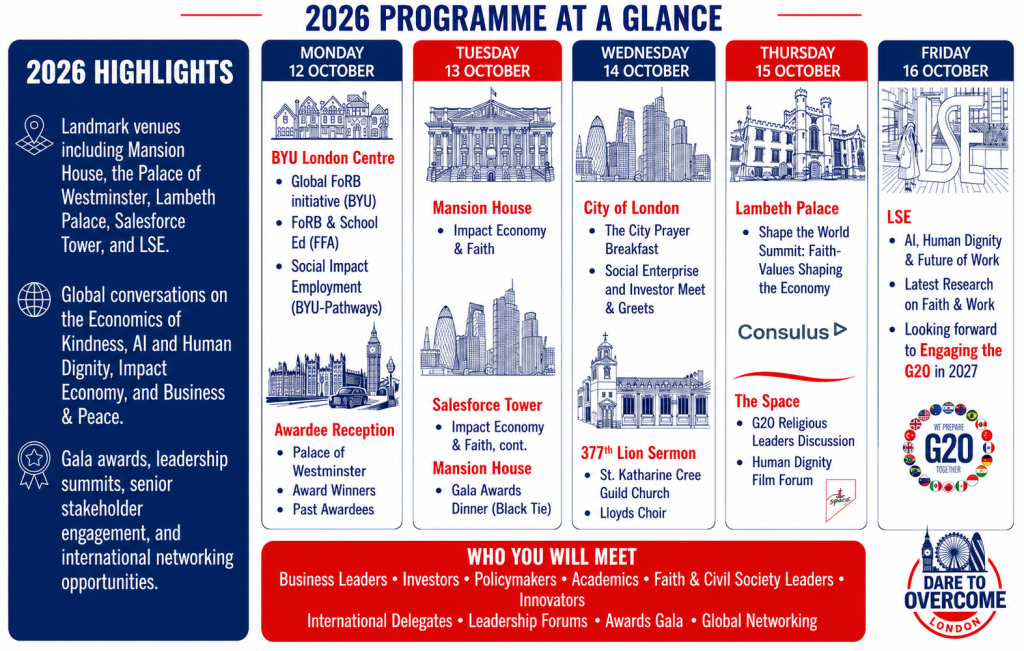
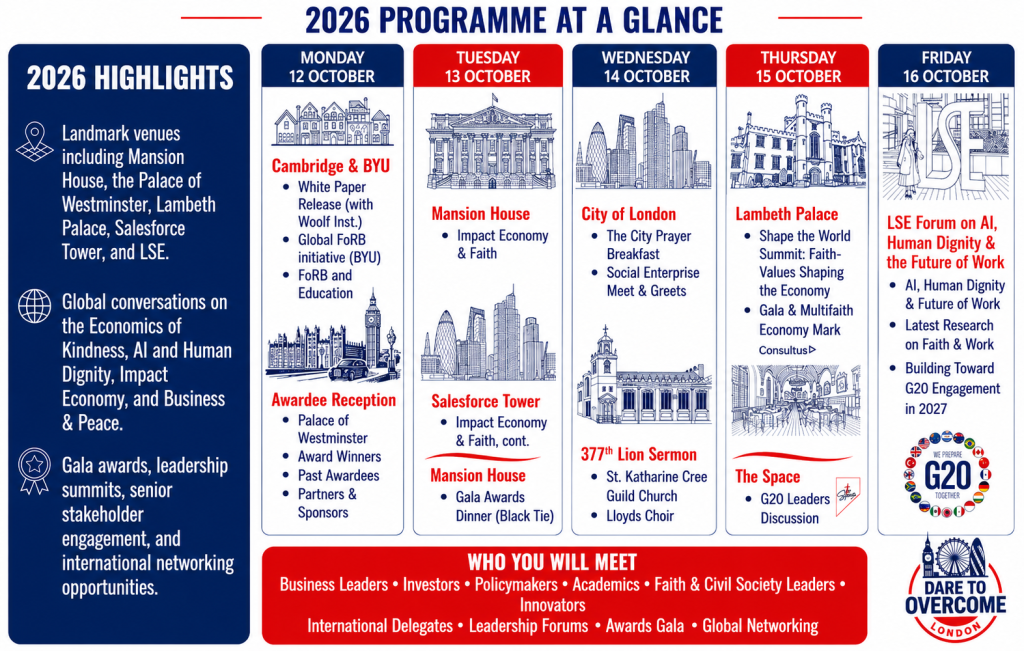
The PBS premiere comes as preparations are underway for the 2026 Dare to Overcome Global Reunion and the King Husein Global Business & Interfaith Peace Awards in London (12–16 October 2026). The gathering will bring together past award recipients and announce a new class of honorees during a week of events at the Palace of Westminster, Mansion House, Lambeth Palace, and other leading institutions under the theme The Economics of Kindness.

We encourage you to watch and share The Last Twins and celebrate the inspiring work of leaders like Judith Richter, whose efforts remind us that peace is built not only through diplomacy, but through everyday acts of courage, compassion, and bridge-building.

Learn more about the London Global Reunion and Awards: https://dto.world/index.php/dto-london-2026/

Parliamentary Session: AI and Freedom of Religion or Belief

Parliamentary Session: AI and Freedom of Religion or Belief

Wednesday, 8 July 2026 | 5:00–6:00 PM BST
Committee Room 20, UK Parliament, London
Hosted by the APPG for Freedom of Religion or Belief (FoRB)

As artificial intelligence increasingly shapes how we work, communicate, and participate in society, important questions arise about its impact on fundamental freedoms, human dignity, and social cohesion.

Join us at the UK Parliament for a timely discussion on AI and Freedom of Religion or Belief, exploring both the opportunities and risks presented by rapidly advancing technologies. The session will examine how AI can support human flourishing while ensuring that freedom of religion or belief remains protected in an increasingly digital world.

Featured Speakers

Lord Tarassenko CBE FREng FMedSci
President, Reuben College, University of Oxford

Professor Lord (Lionel) Tarassenko is a pioneering engineer, academic, and one of the world’s leading experts in machine learning and healthcare innovation. Internationally recognized for his groundbreaking work in signal processing, artificial intelligence, and patient monitoring, he developed the first FDA-approved machine learning system for critical care, transforming how patient deterioration is detected and managed.

A graduate of Oxford University, where he earned both his BA and DPhil, Lord Tarassenko has held numerous senior leadership positions, including Chair of Electrical Engineering and Head of the Department of Engineering Science. He also founded Oxford’s Institute of Biomedical Engineering, helping bridge engineering, medicine, and public benefit. A prolific researcher, inventor, and entrepreneur, he has authored hundreds of publications, launched multiple technology companies, and was appointed to the House of Lords in 2024 in recognition of his contributions to engineering and healthcare innovation.

Brian J. Grim, Ph.D.
President, Religious Freedom & Business Foundation

Dr. Brian Grim is a leading global expert on religion, economics, and human flourishing. Through the Religious Freedom & Business Foundation and the Dare to Overcome movement, he works with business, government, and civil society leaders to advance freedom of religion or belief, workplace inclusion, and social cohesion worldwide.

Why Attend?

This conversation will bring together policymakers, faith leaders, business executives, academics, and technology experts to explore how innovation can serve humanity while safeguarding fundamental freedoms. As AI becomes embedded in everyday life, ensuring that technology respects human dignity and freedom of conscience has never been more important.

Attendance is limited. Email for invitation.

Recognising the Dignity of Workers in the City of London

What does human dignity look like in the modern workplace?

The Revd Josh Harris, Director of the Joseph Centre for Dignified Work, shares how business, faith, and civic leaders can help ensure every worker flourishes.

About The Joseph Centre for Dignified Work

The Centre works with others to foster discussion and encourage action to make the City of London a place where all – regardless of occupation – can work in conditions of dignity and justice. We do this through research, discussion, and developing partnerships within the City of London and beyond to policymakers in Westminster and elsewhere, remaining rooted in the direct lived experience of London’s workers.

This means we are strong supporters of the London Living Wage for all who work in essential occupations in the City of London. But we want to encourage the City’s employers and businesses to go further, to become national leaders in just working practices so that everyone who works in the City does so under conditions which ensure their human dignity and promotes their flourishing.

Josh Harris is Priest in Charge of the Guild Church for Workers in the City of London, which serves those who work through chaplaincy, practical service, and providing a community of prayer and worship. Alongside this, Josh is Director of the Joseph Centre for Dignified Work. The Centre translates grassroots experience into broader action by connecting it with people across the City’s finance, law and professional services who share the conviction, rooted in our faith, that every worker possesses inherent dignity. Before coming to the City, Josh was a priest in the East End of London, and prior to ordination worked in government.

People Are More Than Economic Units

Why dignity, purpose, and belonging must be at the heart of any serious rethinking of work, wealth, and wellbeing.

By Brian Grim, Ph.D.

Reflections on the new report released by UK Bahá’í Office of Public Affairs, Work, Wealth & Wellbeing: A Collective Reimagining of Social Cohesion, being launched in the UK Parliament on 1st June 2026.

Britain’s social fractures are no longer easy to ignore. Rising inequality, fragile trust in institutions, loneliness, and a growing sense of social distance have left many people wondering what, exactly, is holding society together. The deeper question is not only economic. It is cultural and moral. What kind of society are we building when people are valued mainly for output, income, or status, rather than for their inherent worth and their capacity to contribute?

That is why Work, Wealth & Wellbeing: A Collective Reimagining of Social Cohesion is so timely. The report argues that stronger social cohesion will require more than policy reform alone. It will require a broader understanding of value, one grounded in four interlocking principles: Value, Purpose, Participation, and Collaboration. In that vision, people flourish when they are recognised as intrinsically valuable, trusted with responsibility, and connected to something larger than themselves.


Four organising principles for reimagining work (both paid and unpaid), wealth, and wellbeing emerged from the report: 

  • — Value
  • — Purpose
  • Participation and Contribution
  • — Collaboration

Two other recent texts reinforce that message from different angles. Pope Leo XIV’s encyclical Magnifica Humanitas offers a moral grammar rooted in dignity, solidarity, subsidiarity, and the common good. The Religious Freedom & Business Foundation’s Faith, Belief, and the Future of Corporate Culture adds a workplace lens, showing that trust, integrity, belonging, and purpose are increasingly central to healthy organisations. Taken together, these three perspectives suggest that social cohesion is built not only by systems, but by whether people feel seen, trusted, and able to contribute meaningfully to a shared life.

Contrary to economic theories that portray human beings as primarily selfish, competitive, and motivated chiefly by personal gain, there is growing recognition that human beings are also deeply motivated by meaning, contribution, and connection to others.” — Work, Wealth & Wellbeing

Where Belonging Becomes Real

The first issue is where the foundations of social cohesion are actually being formed. In practice, they seem to emerge most clearly in places where people are treated as contributors rather than as passive recipients. The Bahá’í report’s strongest examples come from local community initiatives, youth programmes, and values-based workplaces where people are consulted, encouraged to act, and given a meaningful role in shaping outcomes.

The wider UK picture broadly confirms this. In England, many adults still report a sense of belonging to their immediate neighbourhood, yet trust in neighbours is markedly weaker. That is a revealing difference. Local attachment remains, but the trust that turns proximity into cohesion is much thinner. At the same time, most adults still see their local area as a place where people from different backgrounds get along well together, which suggests there is still a real social base on which to build.

Pope Leo’s encyclical offers a compelling image for this challenge. In contrasting Babel with the rebuilding of Jerusalem, he highlights the difference between a society built through power and uniformity and one rebuilt through shared responsibility, plurality, and cooperation. That is strikingly close to the UK report’s vision. Cohesion grows where people help rebuild the walls together, not where they are simply managed from above.

How Institutions Earn Trust

A second question is what institutions can do to help people feel valued, trusted, and able to contribute. The best answer is that they must provide structure without suffocating participation. The Bahá’í report shows this in practice. In Sheffield, a community-building initiative enabled young people to identify problems and organise responses around health and wellbeing. In London, a youth internship model linked work experience with service and character development. At Apax, a social enterprise in supported housing, staff contribute through regular reflection meetings and shared ownership of the organisation’s development.

This lesson is echoed in recent UK thinking on trust and public engagement. Public trust in political institutions has been declining, and effective public engagement can help restore legitimacy when it is transparent, inclusive, accessible, timely, and linked to actual decision-making. Poor engagement, especially where participation feels tokenistic or disconnected from outcomes, can deepen distrust. Legitimacy depends not only on what is delivered, but on whether people believe their involvement matters.

Pope Leo frames the same issue through subsidiarity. Higher authorities, he argues, should support the initiative of persons, families, associations, and communities rather than replace them. Institutions strengthen cohesion not when they do everything themselves, but when they enable others to act with dignity and responsibility. The Religious Freedom & Business Foundation adds that the same is true inside organisations. Workplaces build trust when people are treated as whole persons, capable of bringing meaning, conviction, and service into their work, not merely as performers of tasks.

Agency, Not Dependency

The policy question, then, is what kinds of approaches cultivate agency rather than dependency. Here, the Bahá’í report is refreshingly clear. It argues for policies that develop capacity, recognise diverse forms of contribution, and invest in the infrastructure of participation. In particular, it calls for public services to support people’s long-term potential and social contribution, not only their speed of return to the labour market. It also insists that unpaid care, volunteering, and relational work should be recognised as part of society’s real wealth.

That matters because participation is not evenly distributed. Volunteering remains lower than it was a decade ago, and participation is significantly lower in more deprived areas than in less deprived ones. Agency, in other words, is not simply a matter of attitude. It depends on whether the conditions of life make contribution possible.

Pope Leo reinforces this through solidarity and subsidiarity together. He argues that systems should create room for people, families, schools, associations, and communities to carry real responsibility. The Religious Freedom & Business Foundation makes a parallel point in corporate life. Institutions are strongest when they recognise people not just as economic resources, but as bearers of ethical agency, meaning, and responsibility.

Why Meaning Still Matters

Another major issue is the place of meaning, contribution, and service in shaping economic and social behaviour. Too often, modern debate treats these as nice extras, morally appealing perhaps, but secondary to productivity or growth. All three reports suggest the opposite. Meaning and service are not marginal to flourishing. They are part of its foundation.

The Bahá’í report repeatedly shows that purpose grows when people experience their efforts as contributing to something larger than themselves. In its case studies, commitment deepens when individuals see their work or service as socially meaningful. Pope Leo says much the same in theological language, describing work as a sphere of human freedom, creativity, and cooperation, not merely a mechanism for earning income. He warns against societies that judge people mainly by what they produce.

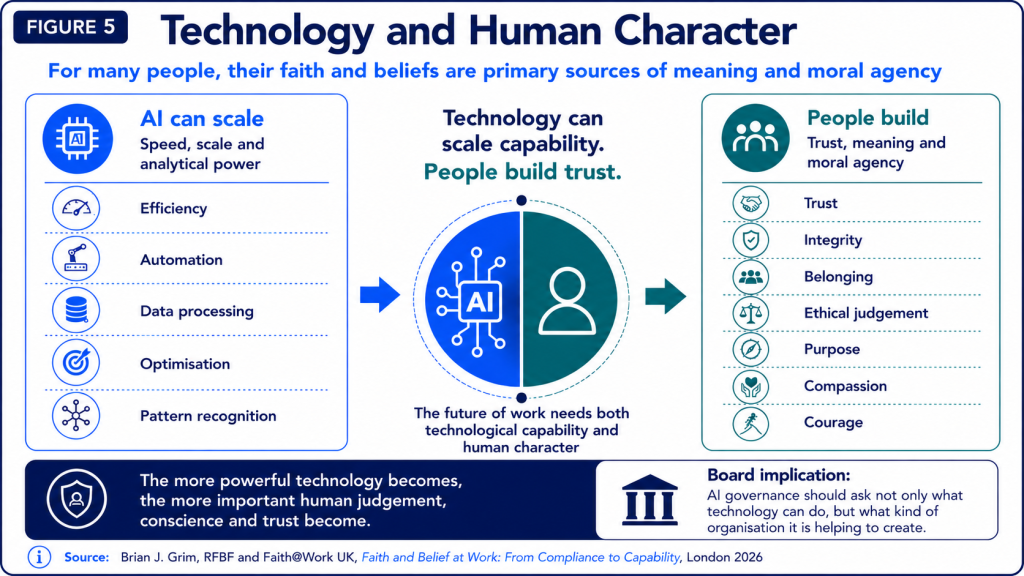
The Religious Freedom & Business Foundation brings that insight into the workplace. Its report argues that technology cannot replace the human need for meaning, trust, purpose, dignity, and belonging. It also finds that leading organisations increasingly rely on values such as integrity, collaboration, responsibility, and people focus. In other words, meaning is not a distraction from serious institutional life. It is one of the things that makes serious institutional life possible.

Young People and the Search for Purpose

Perhaps nowhere is this more visible than among younger generations. In the UK, many young people are not only looking for employment. They are also looking for belonging, purpose, and a sense that they can contribute meaningfully. Recent government work with young people in England shows intense concern about money, mental health, safety, work, and housing. It also shows a strong desire for safe and affordable places to gather, trusted adults, practical life skills, meaningful work experience, and a genuine voice in decisions that affect them.

The supporting data underline how urgent that is. Younger adults are more likely than older age groups to report loneliness and lower hope for the future. Questions about work, agency, and belonging are not separate issues for younger people. They are intertwined.

The Bahá’í report suggests that youth purpose is strengthened when work, service, and identity are connected rather than split apart. Pope Leo’s encyclical deepens that by insisting that development must be integral, not merely economic. And the Religious Freedom & Business Foundation shows that workplaces, too, are healthiest when they give people a sense that what they do matters beyond output alone.

From Participation to Shared Responsibility

The final challenge is how collaboration becomes more than a slogan. People move from passive participation to active contribution when they are listened to, trusted with responsibility, and able to see that their voice has consequences. The Bahá’í report is especially strong on this. Its recurring pattern is consultation, action, and reflection. Collaboration becomes cultural when it is structured, repeated, and connected to shared learning.

Pope Leo offers a parallel framework. He links solidarity with active participation in shared decisions and subsidiarity with decision-making as close as possible to those affected. The Religious Freedom & Business Foundation adds that collaboration flourishes where trust, belonging, integrity, and people focus are embedded into the rhythms of organisational life. Across all three, the lesson is remarkably consistent: collaboration becomes real when it is routinised, resourced, and lived out through relationships.

Britain’s question, then, is not simply whether it can restore social cohesion through better policy. It is whether it can recover a fuller understanding of the human person. These reports suggest that repair will come not from seeing people as economic units to be managed, but as persons with dignity, purpose, and a capacity to contribute to the common good. That is a demanding vision, but also a hopeful one. It reminds us that social cohesion is not something we inherit automatically. It is something we build, weaken, or rebuild through the ways we value one another, structure our institutions, and imagine the good of the society we share.

For those who would like to explore these ideas more fully, I invite you to join us at Dare to Overcome: The Economics of Kindness in London, 12–16 October 2026. You can learn more here: Dare to Overcome London 2026.