

The Board conversation
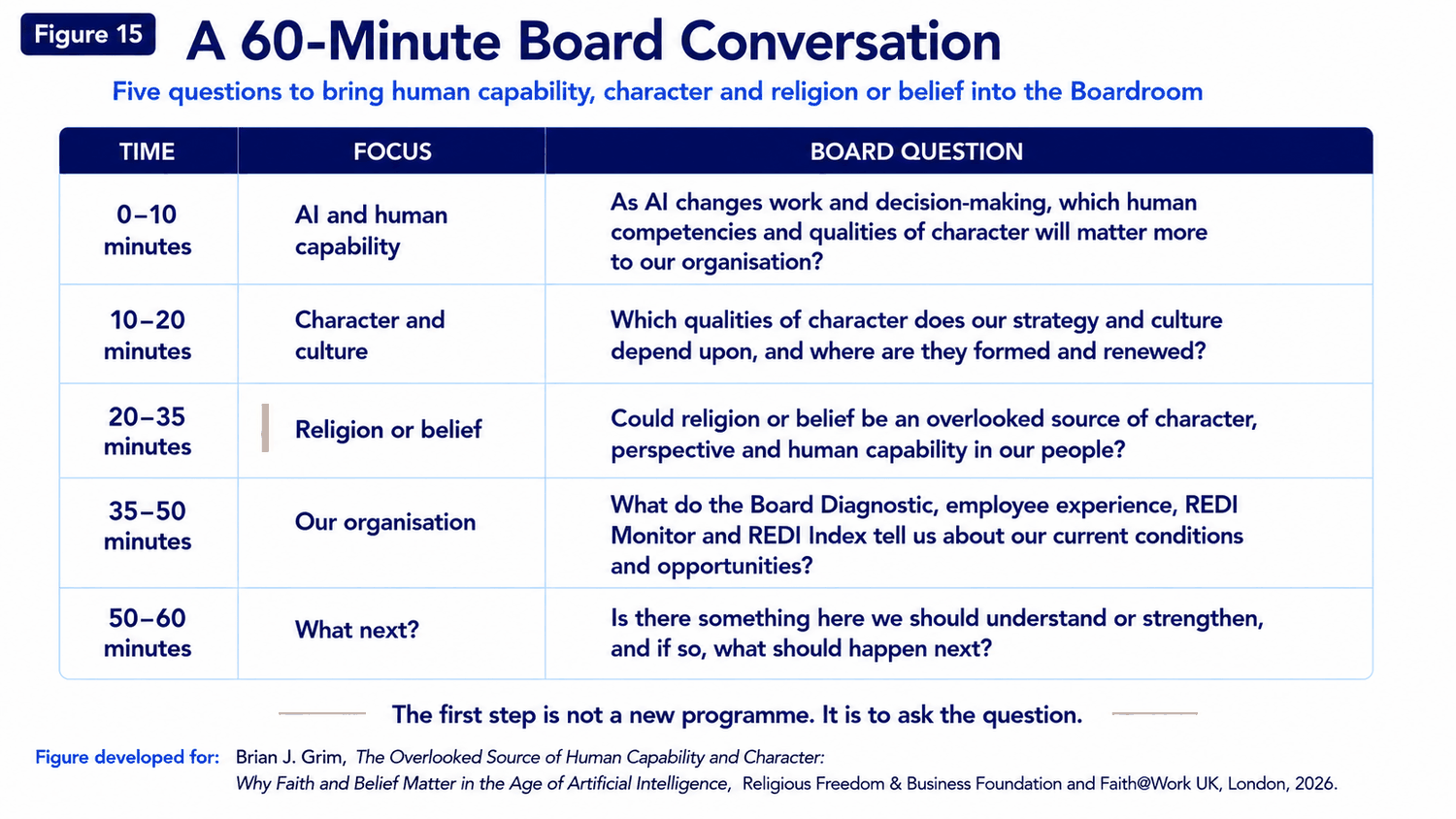
Not a new programme. A 60-minute conversation that begins by asking the question.
As AI changes what people and technology each contribute, what qualities of human capability will matter most to this organisation?
The Board does not need to resolve every question in that hour. It does need to decide whether there is something here worth understanding better.
Four lenses
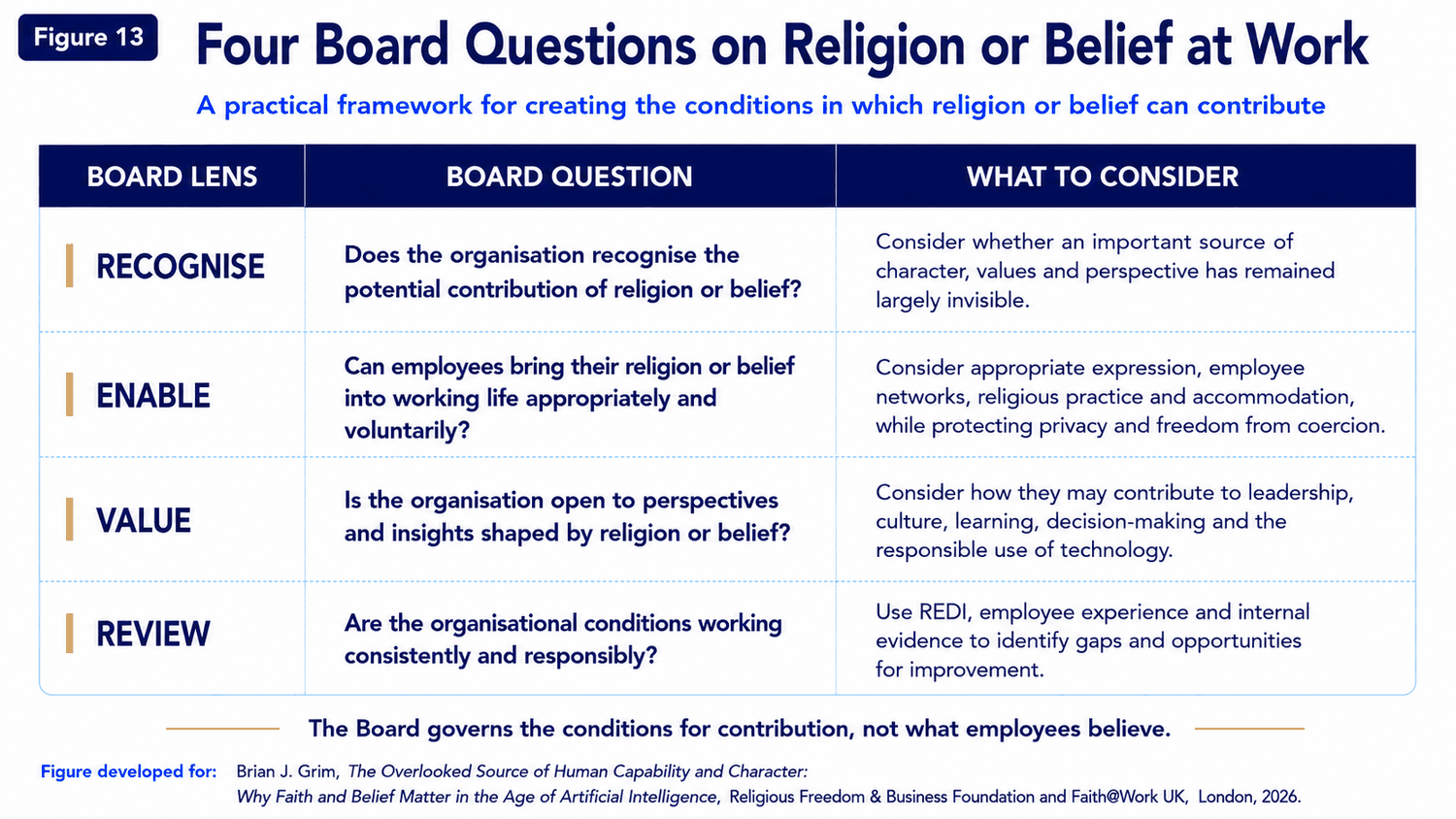
These are not four sequential steps. Boards do not need to become experts in religion or assess the merits of particular beliefs.
- Recognise. Does the organisation recognise the potential contribution of religion or belief? Has an important source of character, values and perspective remained largely invisible?
- Enable. Can employees bring their religion or belief into working life appropriately and voluntarily, while privacy and freedom from coercion are protected?
- Value. Is the organisation open to perspectives and insights shaped by religion or belief in leadership, culture, learning, decision-making and the responsible use of technology?
- Review. Are the organisational conditions working consistently and responsibly? REDI, employee experience and internal evidence can help identify gaps.
The 60-minute agenda
Directors move from the implications of AI for human capability, to the character the organisation depends upon, to whether religion or belief has been overlooked, to what the evidence reveals and what deserves further attention.
The diagnostic
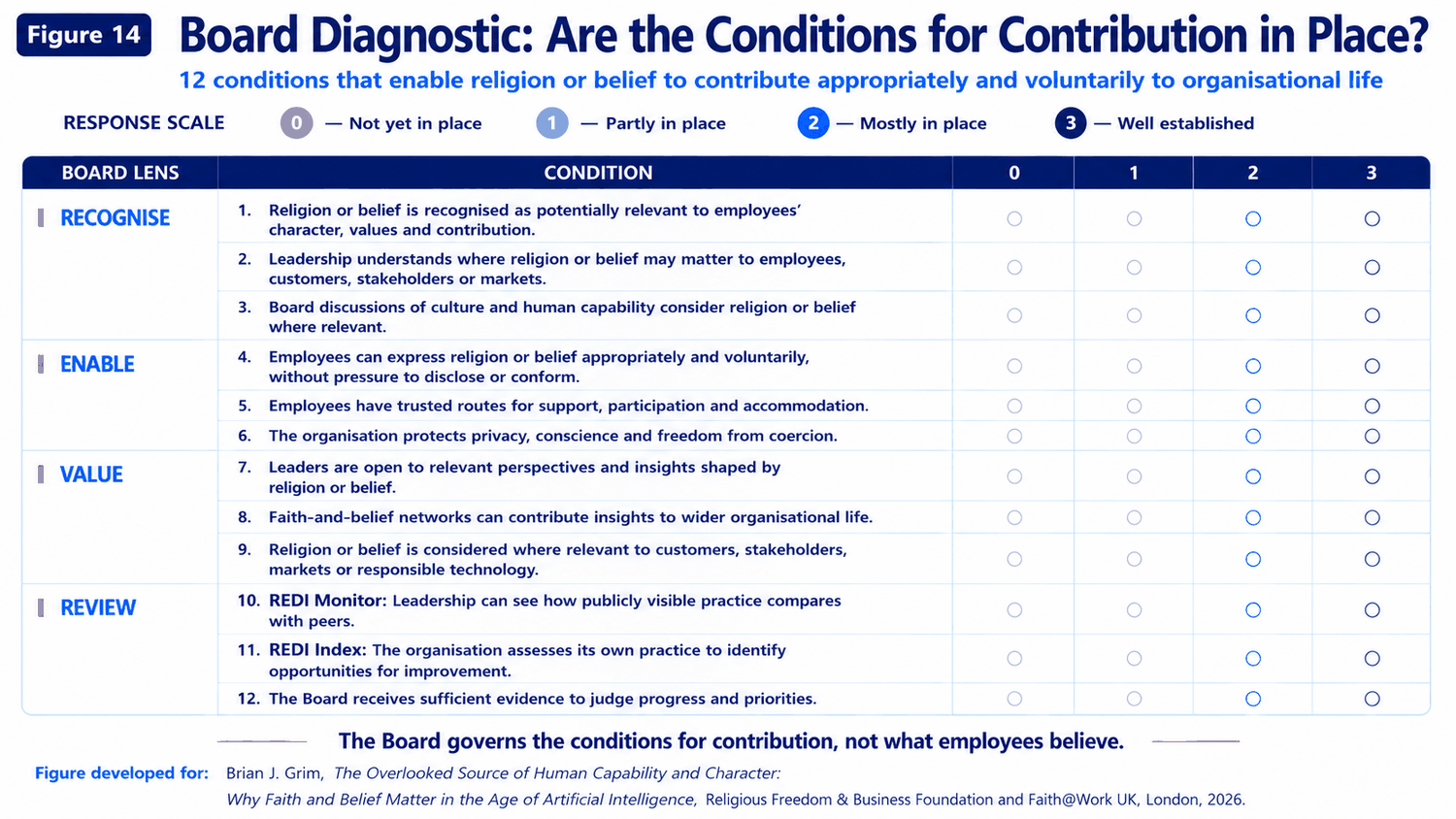
Twelve questions under the four lenses. The purpose is not to produce a score, but to reveal the pattern: where are the conditions strongest or weakest, which matters most here, and where might unnecessary barriers be limiting contribution?
Evidence to bring to the table
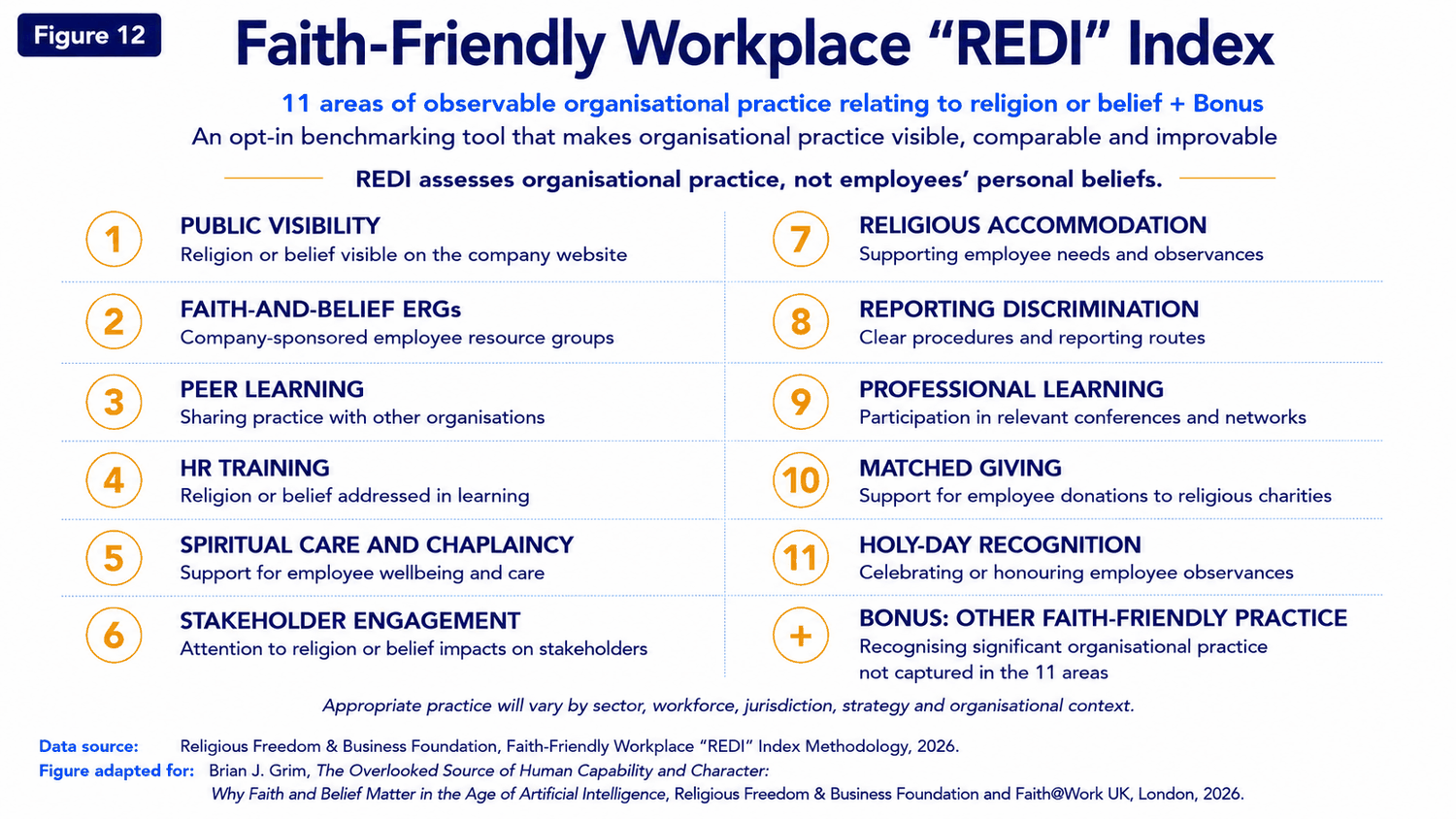
REDI Monitor
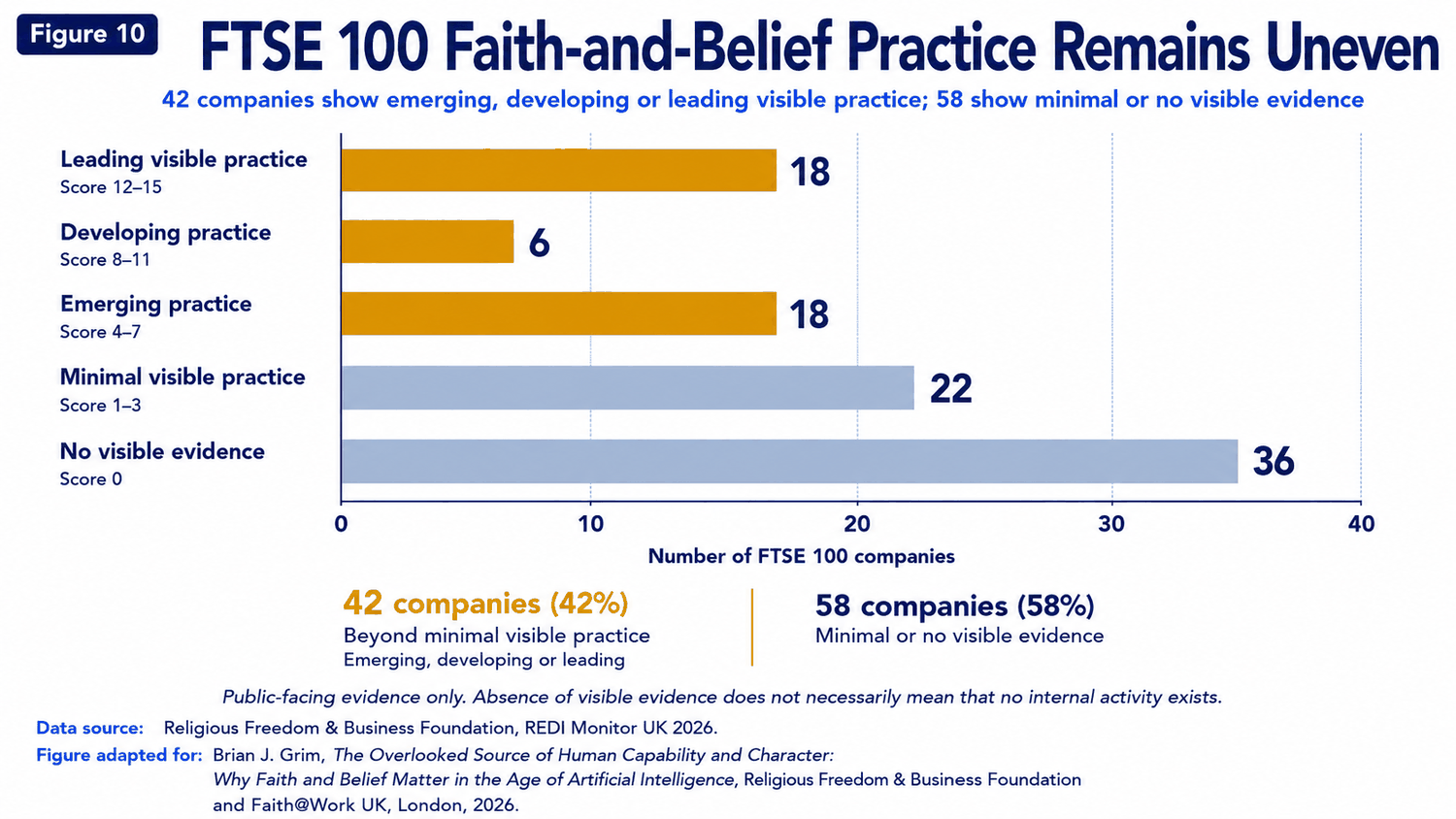
Shows how publicly visible practice compares with peers. It requires no company participation.
REDI Index
An opt-in benchmarking survey across 11 areas of observable organisational practice plus a bonus. It assesses practice, not employees’ personal beliefs.
Governing, not avoiding
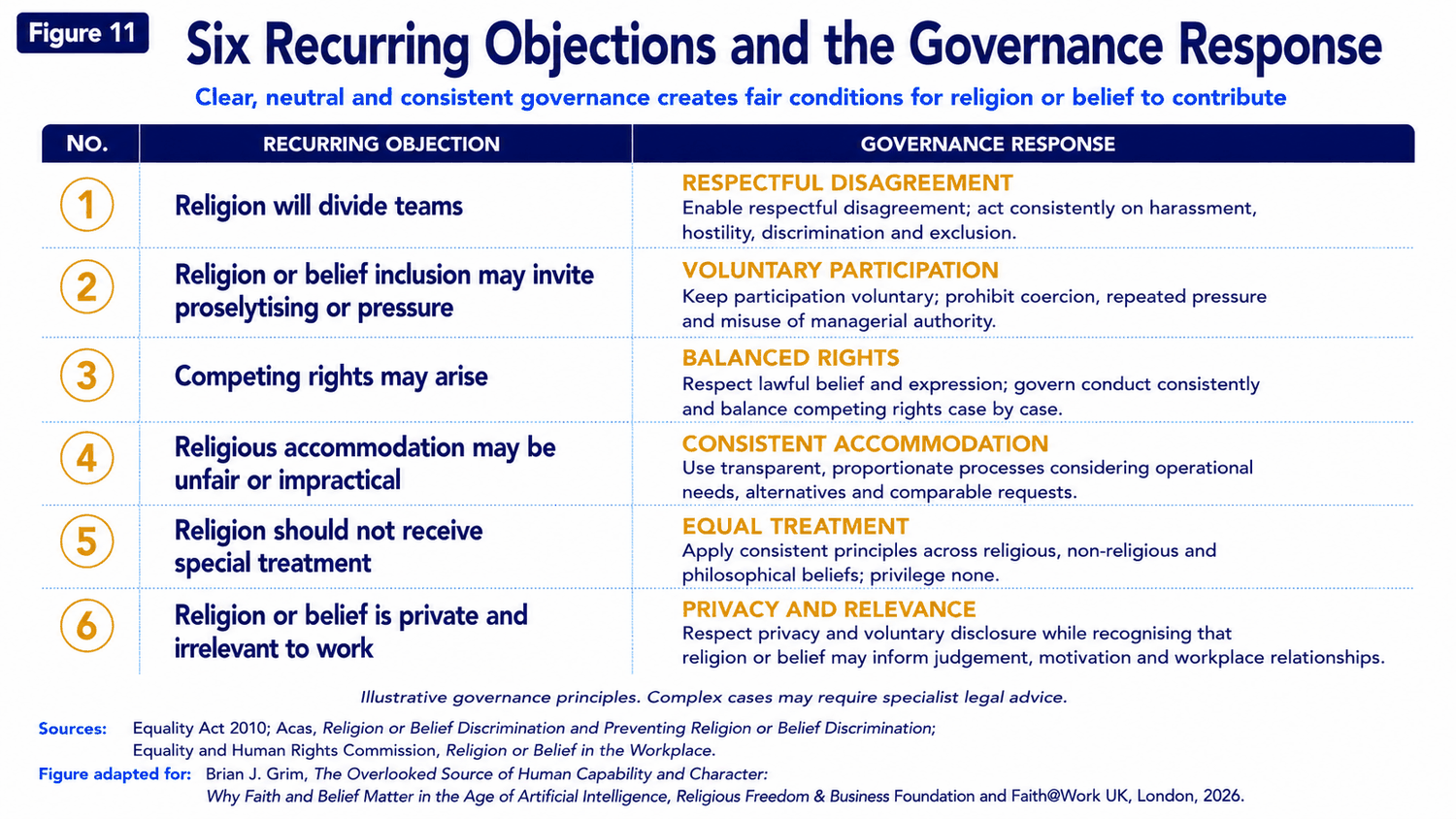
Concerns about division, proselytising, competing rights, accommodation, fairness and privacy require capable governance: neutrality, voluntary participation, clear boundaries and protection from coercion. Boards govern conduct, culture and organisational conditions, not employees’ beliefs. No tradition guarantees good conduct, and Boards should neither endorse nor assess what people believe.
Source for all figures: Brian J. Grim, The Overlooked Source of Human Capability and Character: Why Faith and Belief Matter in the Age of Artificial Intelligence, Religious Freedom & Business Foundation and Faith@Work UK, London, 2026.
Next steps, in proportion
Identify what the Board wants to know, who should take the work forward and when the subject should return for discussion. The most important first step is not a programme, policy or new governance structure. It is to ask the question.