
Lesson 5B Activity – Global Version
Activity: The Human Knot
Often, it takes resiliency to fulfill our duty to protect others’ human rights. Resiliency means we keep trying, even if something is hard or doesn’t work at first. This next challenge will help us practice resiliency. Keep working to solve the puzzle, even if it’s challenging.
Instructions
- Have students stand in a circle, and close their eyes and move slowly toward the center of the circle with their arms extended in front of them, and grab hold of the first two hands that they touch.
- Have them keep their eyes closed until you give them the signal to open them.
- Make sure that each student is holding the hands of two different people.
- Have them open their eyes, and explain that they have to undo the knot and form a circle without letting go of any hands.
- Watch the group to ensure no one gets hurt and intervene only if absolutely necessary.
- After everyone is “unknotted,” have the students return to their seats for the discussion.
(Adapted from: Play It Fair Toolkit, Activity 36. Equitas–International Centre for Human Rights, 2008.)
Questions
- Did you ever want to quit or think you might not be able to undo the knot?
- What strategy worked best in undoing the knot?
- What made you want to keep trying even when it was hard?
- What did this challenge teach us about resiliency?
- In what ways do you think it will take resiliency to get an education?
- How did this activity require collaboration?
- How is collaboration important in getting an education, too?
Lesson 5 Activity – Additional Business-Focused Resources
Activity – Story: Favio Chávez and Turning Trash into Music
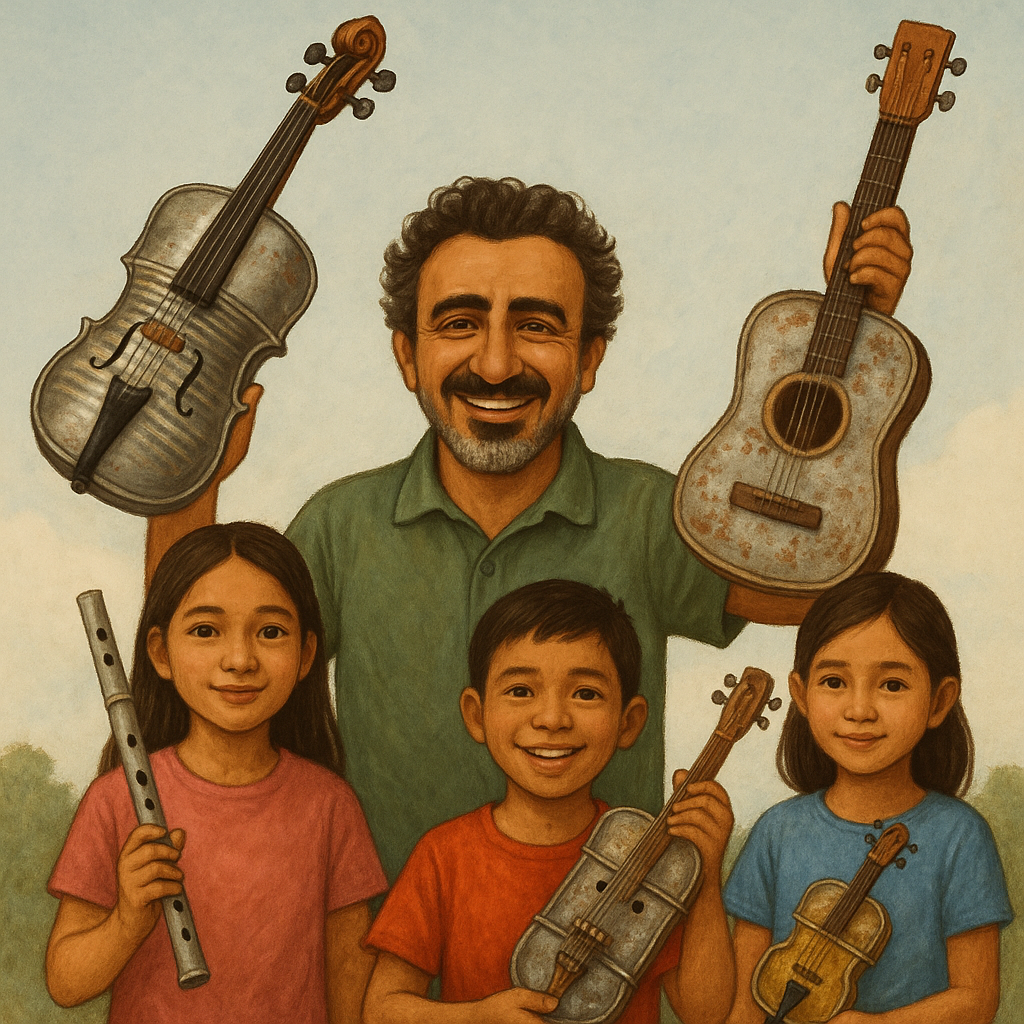
Favio Chávez was a technician at a landfill in the small town of Cateura, Paraguay, when his passion for music led him to start an orchestra that used instruments made out of trash. Every day, he oversaw the sorting of garbage, helping workers pick out recyclable materials. It was hard, dirty work, and the landfill was surrounded by one of the poorest communities in the country. Many families lived right next to the trash piles, and their children grew up with very few opportunities for education or creative activities. Most could not afford to buy school supplies—let alone something like a musical instrument.
Chávez had always loved music and believed that learning to play an instrument could change a young person’s life. Music teaches discipline, teamwork, patience, and confidence—skills that are valuable both in school and in future jobs. But in Cateura, violins, guitars, and flutes were far beyond anyone’s budget. A single violin could cost more than a family’s monthly income. Without access to instruments, music education seemed impossible.
That’s when Chávez had a creative idea. If instruments were too expensive to buy, what if they made their own? He partnered with a local carpenter, Nicolás Gómez, who worked at the landfill. Together, they began collecting discarded materials: oil drums, tin cans, forks, wood scraps, and bottle caps. With skill and imagination, Gómez shaped the trash into instruments. Oil drums became the bodies of cellos; baking tins became violin backs; forks were bent into tuning pegs. At first, the instruments looked strange, but they worked—and they made music.
Chávez started teaching music lessons after his work shifts using these recycled instruments. At first, only a handful of kids showed up, but word spread quickly. Soon, dozens of children were learning to play. Chávez and his students formed the “Recycled Orchestra of Cateura,” a group that played classical music, folk songs, and popular hits—all on instruments made from trash. The project not only gave kids a musical education, but also gave them confidence, hope, and a new way to see their future.
Over time, the orchestra gained international attention. They were invited to perform around the world, sharing their music and their message: that talent and determination matter more than expensive resources. Profits from concerts helped fund education for the children, and many went on to pursue higher studies or careers they had never imagined before.
https://www.theguardian.com/world/2013/apr/26/paraguayan-landfill-orchestra-music
Lesson 5 Activity – India
Activity: Justice in Education
The teacher distributes the class into two groups randomly. A scenario is created where one group of students are asked to stop coming to school. The teacher asks how those students can be given justice.
Questions:
- What right is being denied in this situation?
- If someone is denied education, how does it affect their future?
- Can denying education to one group affect the whole society? How?
Lesson 5 Activity – India
Activity: Road to Education: A Real-World Resilience Challenge
Teacher conducts an activity where students are divided into a few groups of 5 students. Each group was assigned a task and at the end of each task group presentations were taken by the teacher.
The theme for group presentation was “The Road to Education: A Real-World Resilience Challenge”
Group Discussion
- Make student groups of 5 students
- They will represent a station each ( Financial Hardship, Long Distance to school, Discrimination, Conflict, Child Labour)
Task
- Each student group receive a task as per their station
- Build the tallest tower using only 5 random materials,
- Walk a set distance balancing books on the head while facing hurdles,
- Solve a puzzle blindfolded while others can see,
- Perform a group task while random “freezes” simulate danger zones,
- Solve academic problems while holding a heavy backpack.
Discussion Stage
- The groups work together to finish their tasks
Presentations
- The class gathers for a guided reflection discussion
- The groups present their ideas in the class
Lesson 5 Activity – India
Activity: Story, Ambedkar’s Fight to Education Right
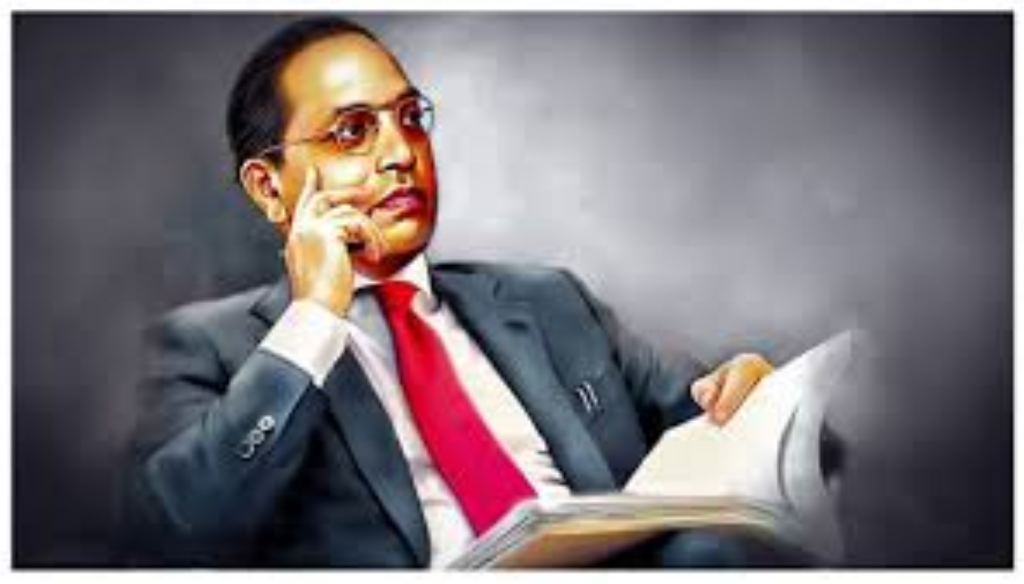
Dr. B. R. Ambedkar was the chief architect of the Indian Constitution. He fought against social discrimination and worked for equality, justice, and the rights of Dalits.
There was a big boy by means of the call of Bhim who sat on his own outside his class in a small Indian village.
He came from an “untouchable” network at that point. Bhim loved studying, however he couldn’t touch the same water containers or sit down at the same seat as other kids. There were instances while his classmates kept away from him and his teachers left him. Bhim by no means gave up wish, however. He listened attentively, made notes on scraps of paper, and was hoping for the day when all children might sit in college with satisfaction.
With time, Bhim became certainly one of India’s maximum scholarly minds, Dr. Bhimrao Ramji Ambedkar. He acquired degrees from global-renowned universities which include the London School of Economics and Columbia University in America. However, he in no way forgot the suffering of no longer receiving an equal schooling.
Dr. Ambedkar turned into the prime architect of the Indian Constitution after independence in India.
One of his strongest convictions was that most effective through schooling can equality be completed.
He proclaimed: “I measure the progress of a community by the degree of progress which women have achieved and the access they have to education.”
The basis for India’s Right to Education became laid because of visionary leaders like Ambedkar. He opined that children of all backgrounds, regardless of caste, religion, gender, or heritage, should have a right to an education in place of it being reserved as a privilege for the elites or individuals of positive castes.
As an end result of his tireless efforts, Article 21A of the Indian Constitution now ensures the proper to schooling, presenting loose and obligatory education to every baby between the a long time of 6 and 14.
The lifestyles of Dr. Ambedkar illustrate that schooling isn’t always about memorizing records but exercising one’s freedom, rights, and dignity.
Questions
- Do you think there is proper awareness of rights in today’s day and age?
- How did Ambedkar show resilience in gaining his right to education?
Lesson 5 Activity – India
Activity: Barrier Wall – Break It Down!
This activity involves creating a brick wall labeled “Barriers to Education” in their notebooks. They then write ways to break down each barrier using resilient actions and rights-based solutions
Question:
“How can personal resilience and government support work together to protect a child’s right to education?”
Lesson 5 Activity – India, Additional Activities
Activity: Right to Learn – Chain Reaction Game
Objective: To demonstrate the cause-and-effect impact of education (or its absence) on a person’s life and society.
Instructions:
- Form a circle or line with the whole class.
- The first student begins by saying a statement like “If I couldn’t go to school, I wouldn’t learn to read.”
- The next student adds a consequence: “If I couldn’t read, I wouldn’t be able to fill out a job application.”
- The third continues:
“If I couldn’t get a job, I wouldn’t be able to support my family.” - The chain continues until students demonstrate the long-term effect of being denied education.
Question
- Which consequence in the chain surprised you the most, and why?
Lesson 5 Activity – India, Additional Activities
Activity: Reflection Journal Prompt – “If I Lost My Right to Education…”
Objective: To help students develop self-awareness and empathy, and to reflect on the privileges they may take for granted.
Instructions:
- Provide the journal prompt:
“Imagine waking up tomorrow and being told you are no longer allowed to attend school. Describe your feelings and what your life might look like after one week, one year, and five years. How would it affect your dreams and your future?” - Allow students to write freely for 10–15 minutes.
- Encourage them to use first-person narrative (as themselves).
- Optional: Let students draw a before-and-after sketch in the journal to visualize their life with and without education.
Lesson 5A Activity – Colega Primary Manual
Activity: The Story of Malala
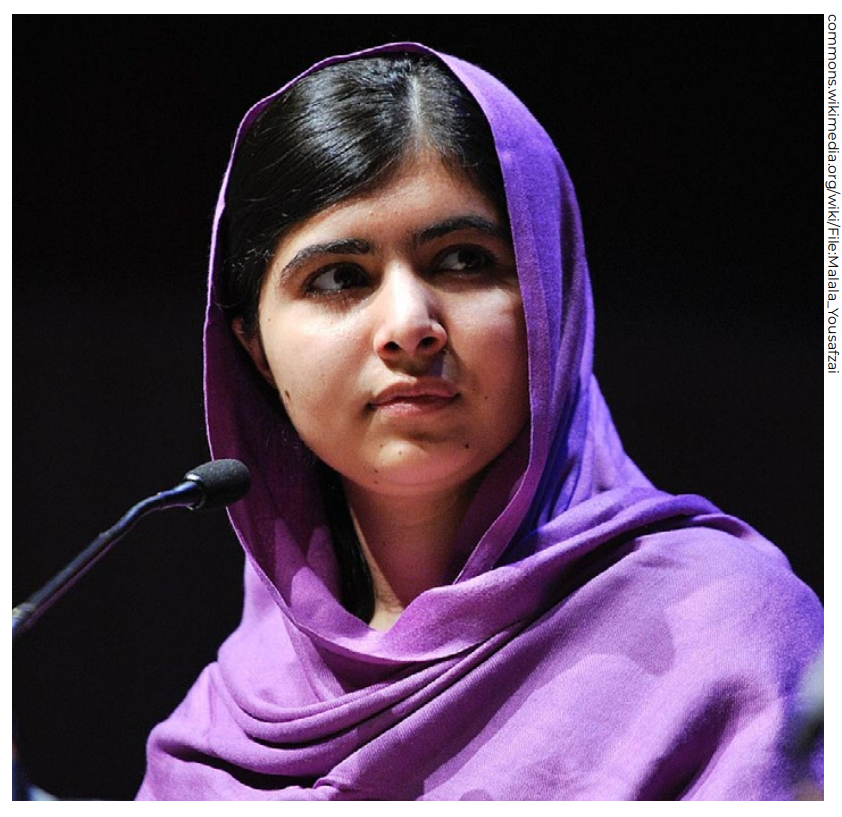
Malala is from Pakistan, a country near India. She was only fifteen years old when some people tried to hurt her just because she said girls should have the right to go to school.
Show the picture of Malala and tell her story.
Pakistan is a beautiful country but more than half the girls there don’t go to school even though most of the boys do. However, Malala was very lucky because her father was in charge of a big school and he thought girls should go to school. So Malala went to school every day and was very happy.
Then there was a war in her country, and the soldiers from the enemy side came to her town. They said girls couldn’t go to school, but Malala and her friends refused to obey them. They loved school and they kept going. So the soldiers issued a death threat against Malala but nobody thought they would actually kill a young girl.
One day when Malala was fifteen years old, she was riding a bus with friends on their way home from school, when a masked gunman stopped the bus, got on board, and shouted, “Who is Malala?” Then he fired at her, hitting Malala in the head before he ran away. Malala almost died. People around the world were shocked and angry. The government of Pakistan made a new law called the Right to Free and Compulsory Education. Compulsory means that it’s something you have to do. So the new law meant that school was free and that you had to go. That was amazing.
Malala survived the attack and later she graduated from a good university. She is now married, and she speaks all over the world in favor of education, especially for girls.
Last updated: 06/06/26