

[Return to Lesson 4A.]
[Return to Lesson 4B.]
Lesson 4A Business Skills Development Activity – Global Version
Conflict or Bullying?
Create two labeled areas in the room or on the board: “Conflict” and “Bullying.” As a class, define the key differences between conflict and bullying.
Conflict = a disagreement between individuals; can be mutual
Bullying = targeted, repeated harm; power imbalance; intent to hurt
Divide the students into small groups and give each group a scenario slip (printable version below). For classes with fewer students, each group may take a few scenarios. Instruct each group to determine if their scenario is an example of conflict or bullying and place their paper in the correct area.
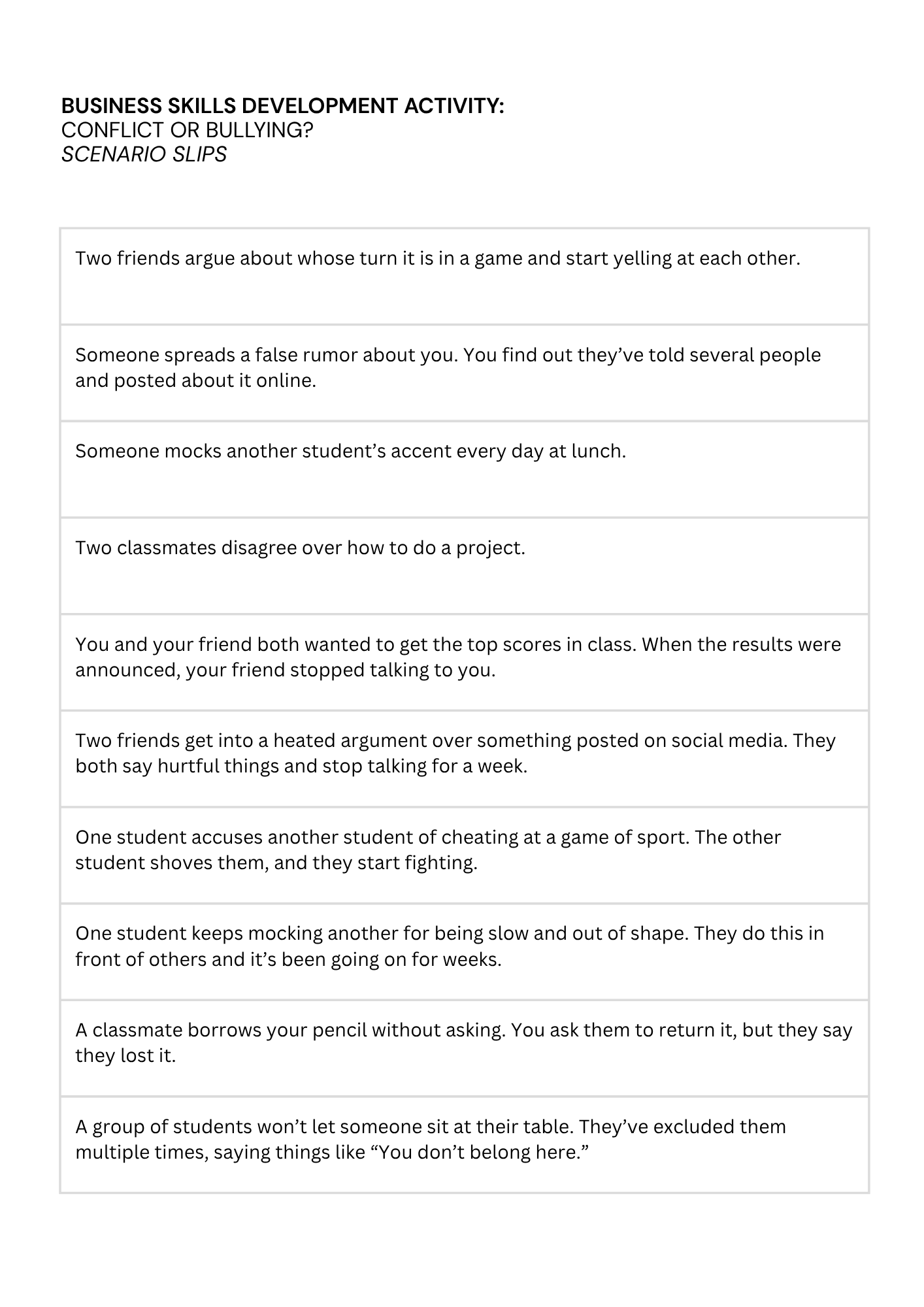
Questions – Bullying
- What are some of the signs that a situation is bullying?
- If a Bystander is someone who stands by and does nothing, what would it look like to be an Upstander?
- What if it doesn’t feel safe to intervene in the situation? What can you do?
- What does it mean to you to refuse to bully?
Questions – Conflict Resolution
- Think about what it’s like to be in a conflict. What are some things the other person might do that make you feel closed or unwilling to resolve the conflict?
- What are some things that they might do that help you feel open or willing?
- Have you seen any of these steps work in your life?
- What’s an example of an “I” statement?
- How are active listening and collaboration helpful skills when resolving conflict?
- Why is it important to find solutions that work for everyone?
- Why is it important to practice resolving conflict in our lives?
Invite each group to explain to the class why they categorized their scenario as they did and to share what a possible response to the situation would be.
Lesson 4B Business Skills Development Activity – Global Version
What Would You Do?
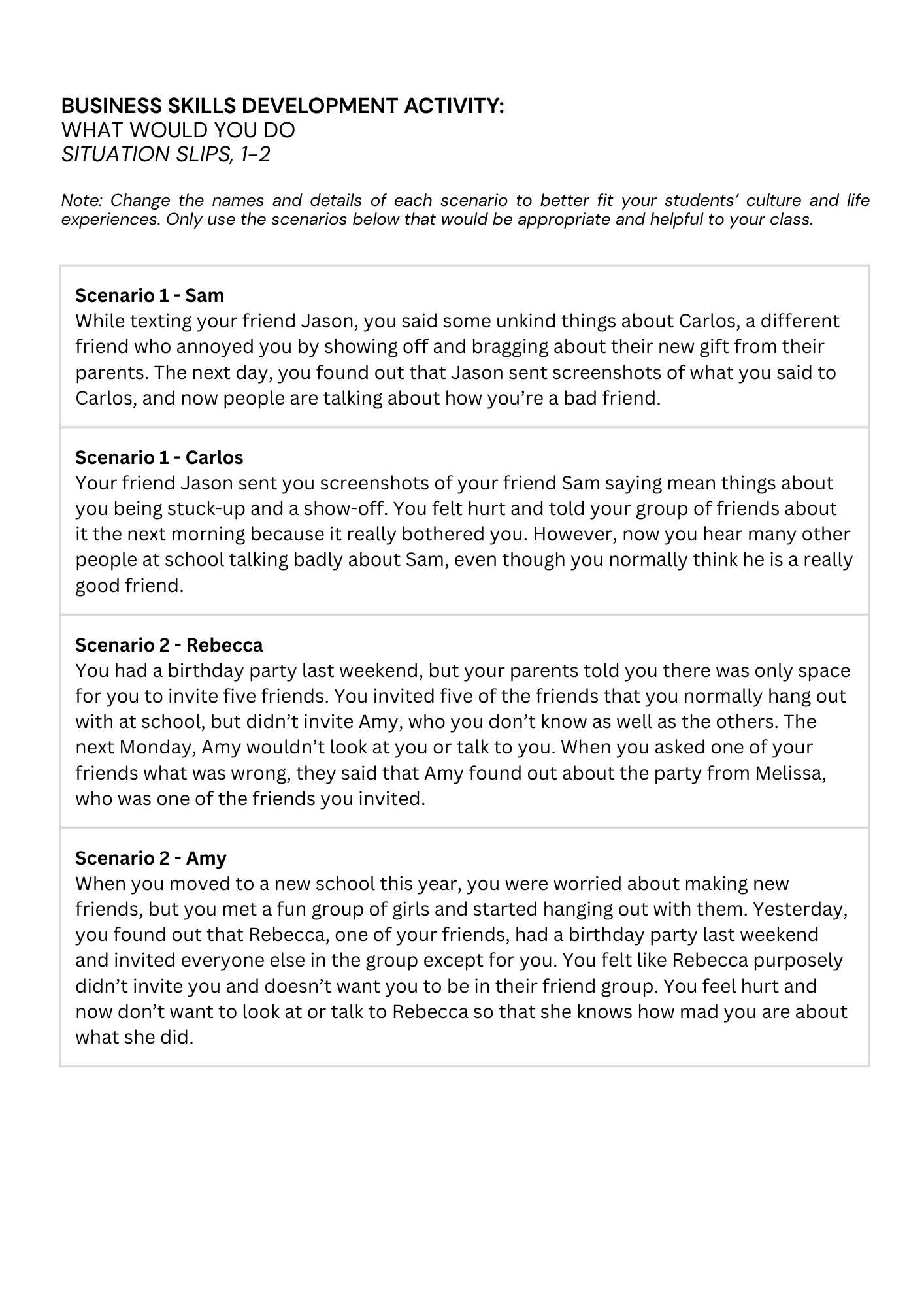
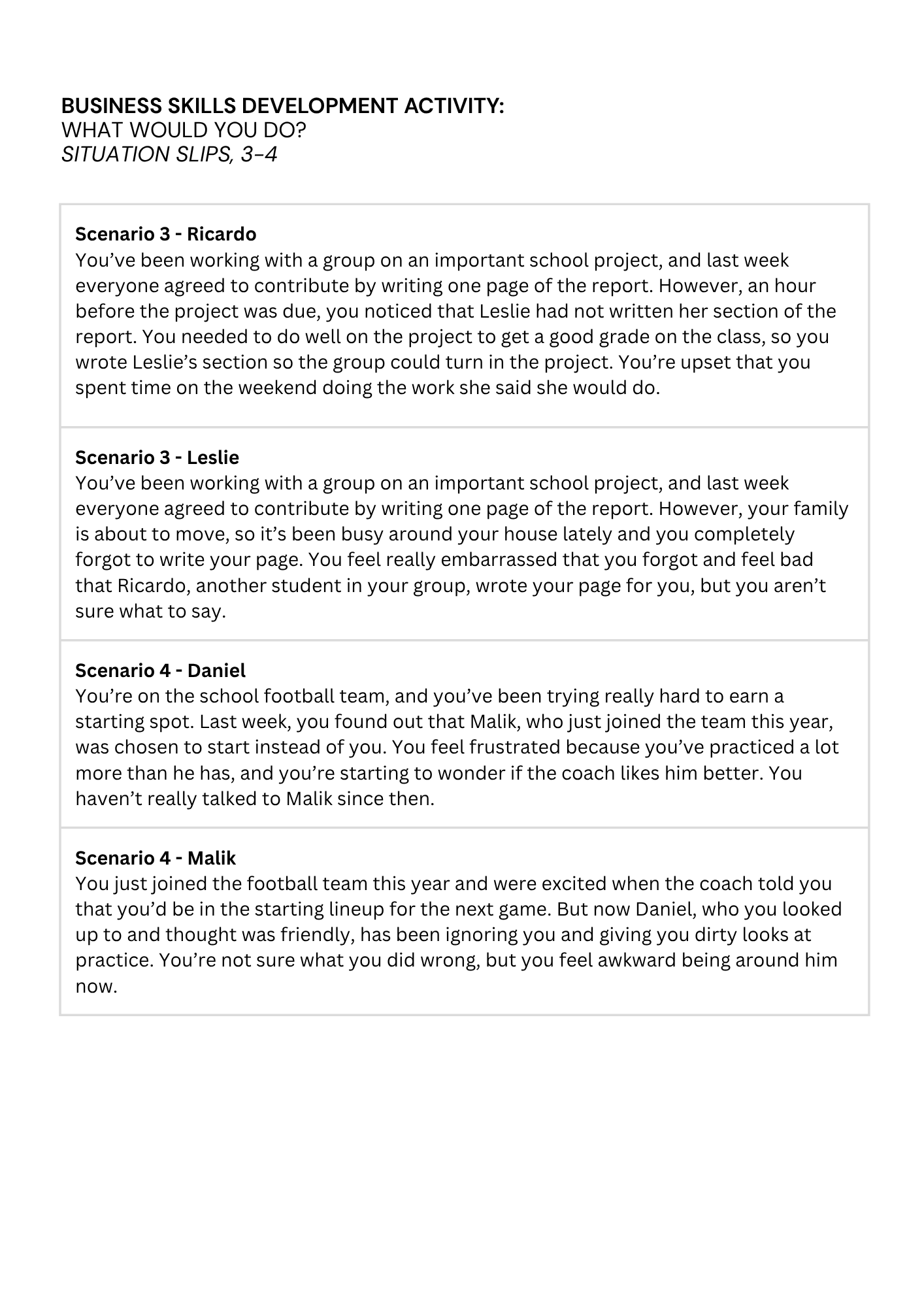
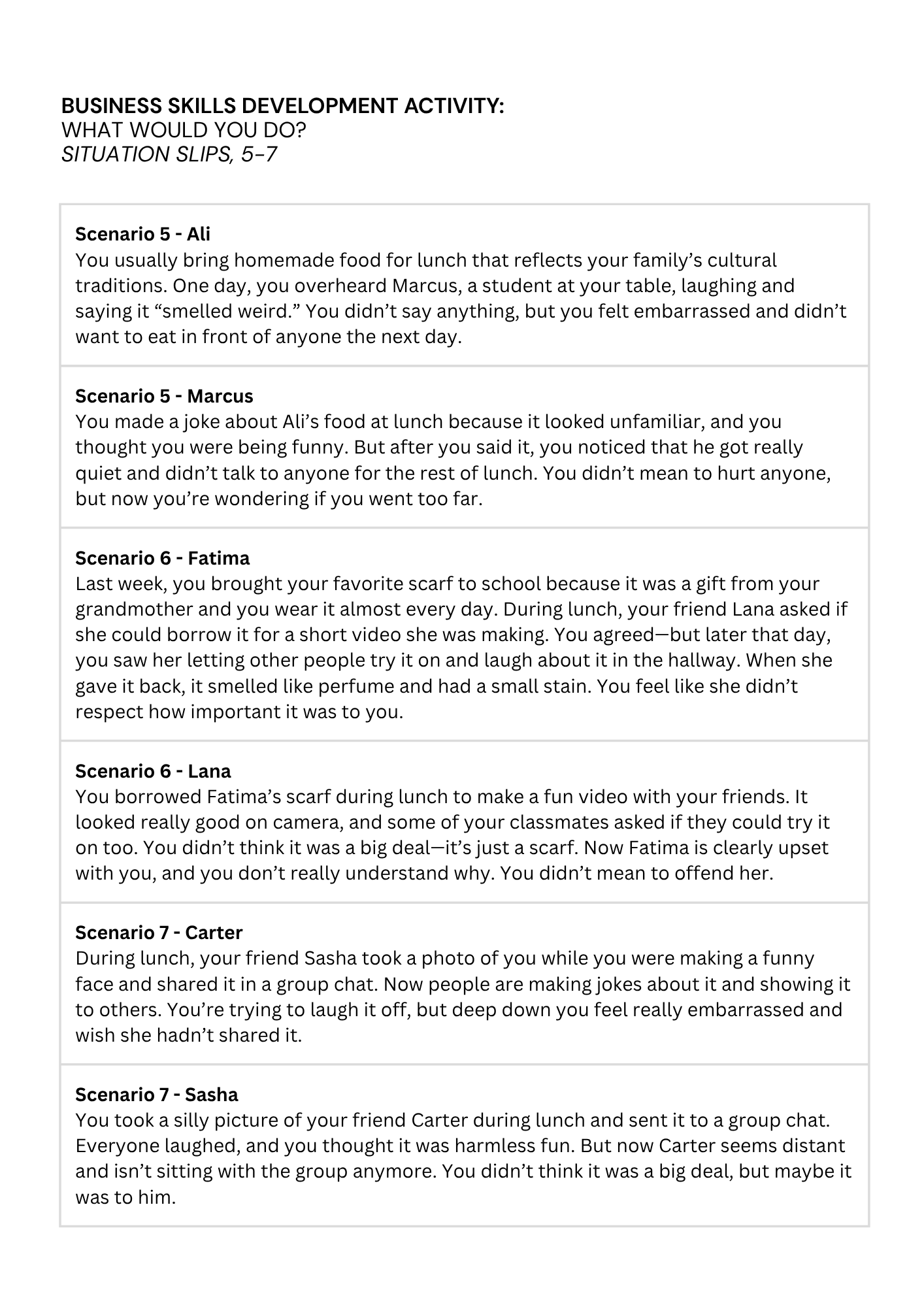
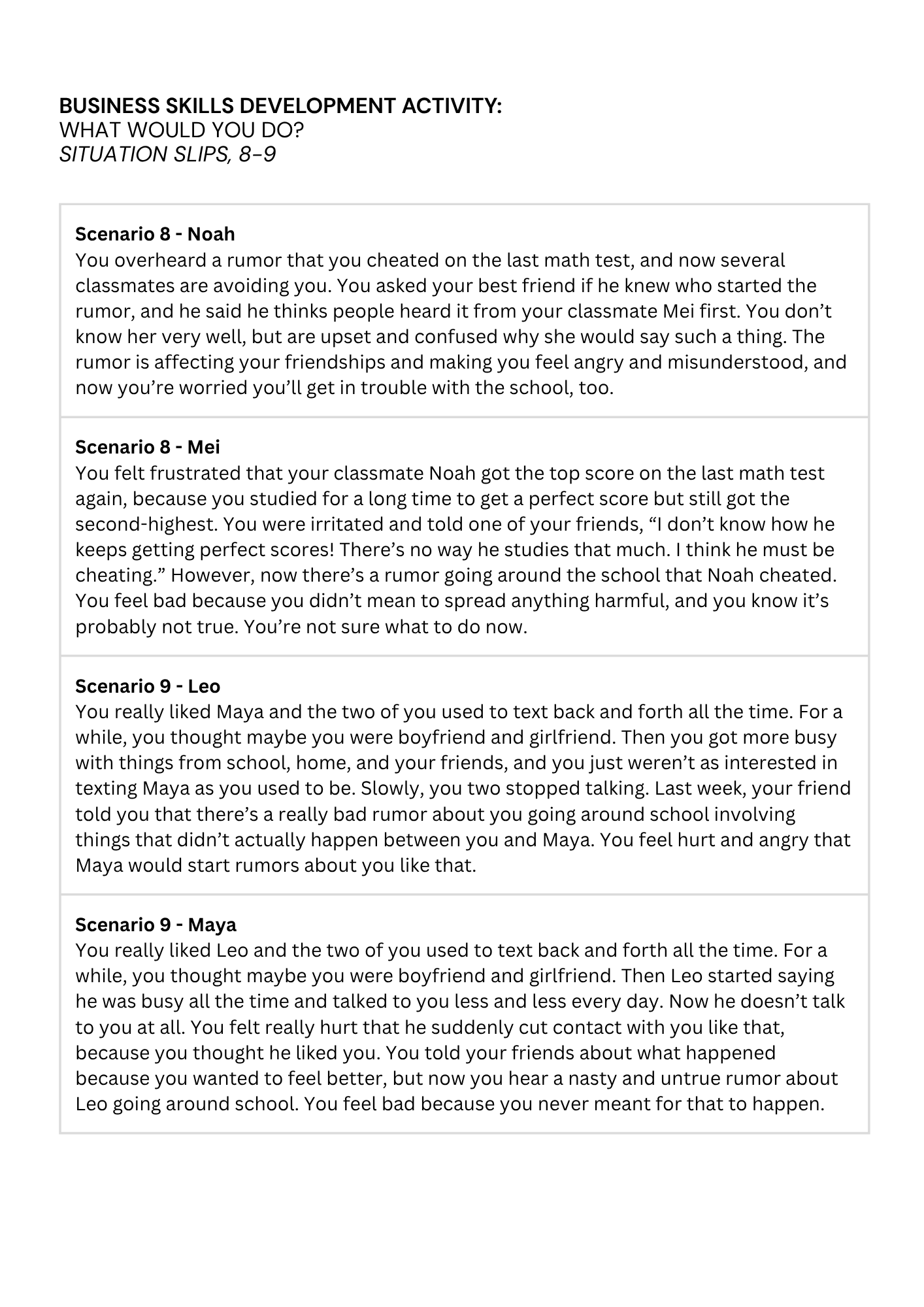
Print and cut the What Would You Do? Situation Slips (see below), repeating as necessary so there is one slip for each student. Divide students into pairs and give each pair a matching set (e.g. one student gets Situation 1 – Sam, and their partner gets Situation 1 – Jason).
Instruct the students to read their slip, then discuss with their partner what they could do to resolve the conflict if they were in the situation. Remind the students that they can use ideas from the 5 C’s for Resolving Conflict poster (see Lesson 4). Visit the groups as they discuss and guide them towards collaborative, compassionate, and de-escalatory responses.
Have the students pair up with a partner and practice what was demonstrated. Give them about 1 minute to do so.
Questions
- Was anyone surprised by their partner’s side of the story?
- What were some responses that you think worked well to resolve the conflict? Allow a few pairs to share their situations and responses with the class.
- Did you think of any new ideas as you talked things through with your partner?
- How do you think practicing conflict resolution would help you in your life?
- What is one aspect of conflict resolution that you want to practice? Allow students to share with the person next to them.
Lesson 4 Business Skills Development Activity – Additional Business-Focused Resources
Activity: Workplace Dilemmas
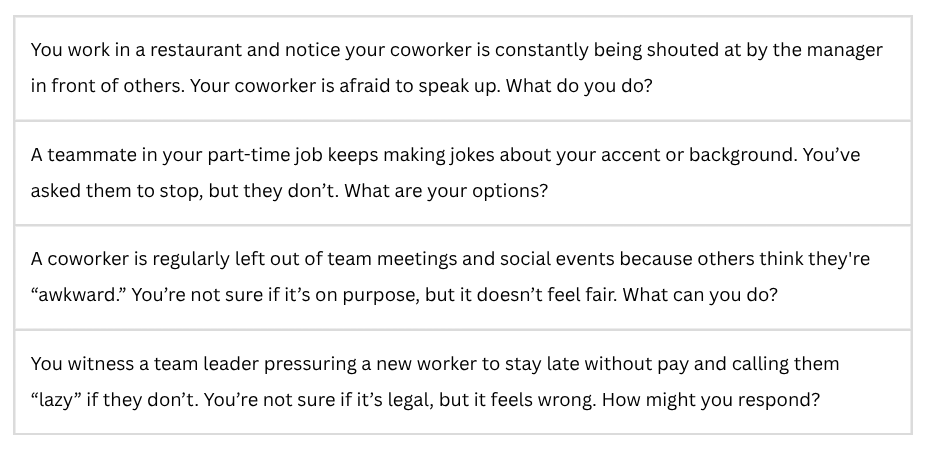
Split students into small groups of 3–5 students each. Give each group a scenario card describing a workplace conflict or inhuman treatment situation (see examples below).
Instruct each group to discuss their scenario, then make a decision together on how to respond using the lens of conflict resolution. Remind the students that they can use ideas from the 5 C’s for Resolving Conflict poster. Visit the groups as they discuss and guide them towards collaborative, compassionate, and de-escalatory responses.
Invite groups to share their scenarios and responses with the class.
Questions
- Why do you think people sometimes stay silent when they see unfair or harmful treatment at work?
- What responsibilities do coworkers, managers, or companies have to prevent inhuman treatment?
- What are some peaceful, respectful ways to stand up for someone or resolve a disagreement?
- How can strong conflict resolution skills help you succeed in future jobs?
Example Scenario Cards
Last updated: 05/20/26