

[Return to Lesson 3A.]
[Return to Lesson 3B.]
Lesson 3A Activity – Global Version
Activity: Story, “Amalia’s Hijab”
Who knows what a hijab is? A hijab is like a big scarf that some Muslim girls and women wear when they’re not at home. I’m going to tell you a story about a Muslim girl who moved to another country after living in a refugee camp for three years.
When Amalia went to school, she was surprised to see that she was the only girl wearing a hijab. All the girls had worn hijabs in her old school. At lunch time, she noticed that some of the students were staring at her, which made her feel embarrassed.
Then Miko slipped into the chair beside her. “I like your scarf,” she said. “It’s pretty.”
“It’s a hijab,” Amalia told her.
“Do you wear it every day?” asked Miko.
“Yes,” replied Amalia.
When Miko asked her why, Amalia explained, “I wear it because of my faith in my Muslim religion. And to honor the Qur’an and Allah.”
“You should tell our class about your—what do you call it again?” asked Miko.
“It’s a hijab,” replied Amalia. “I could tell the class about it, but it makes me feel shy and embarrassed to be so different from everyone else.”
“Actually, we are all different in some way or another,” Miko told her. “A Jewish boy in our grade, David, told us about the Kippah he wears. And Gabriella wears a gold cross necklace because she’s Catholic. Cal wears long braids because that’s what some men in his Navajo community do. I’m Japanese. Some people think my lunch is strange. Would you like to try some seaweed? My aunt gathers it from the ocean. She dries it and sends it to our family.”
Amalia smiled at Miko and took a bite of seaweed.
Questions
- Why does Amalia feel different from everyone else in her class?
- What rights does Amalia have?
- How do some students discriminate against Amalia?
- If this is discrimination, what can we do to decrease it in our schools and communities?
- What other kinds of discrimination are there? Discuss other examples of discrimination listed in Article 2, such as age, race, gender, and language.
- There are many different kinds of discrimination.
Lesson 3B Activity – Global Version
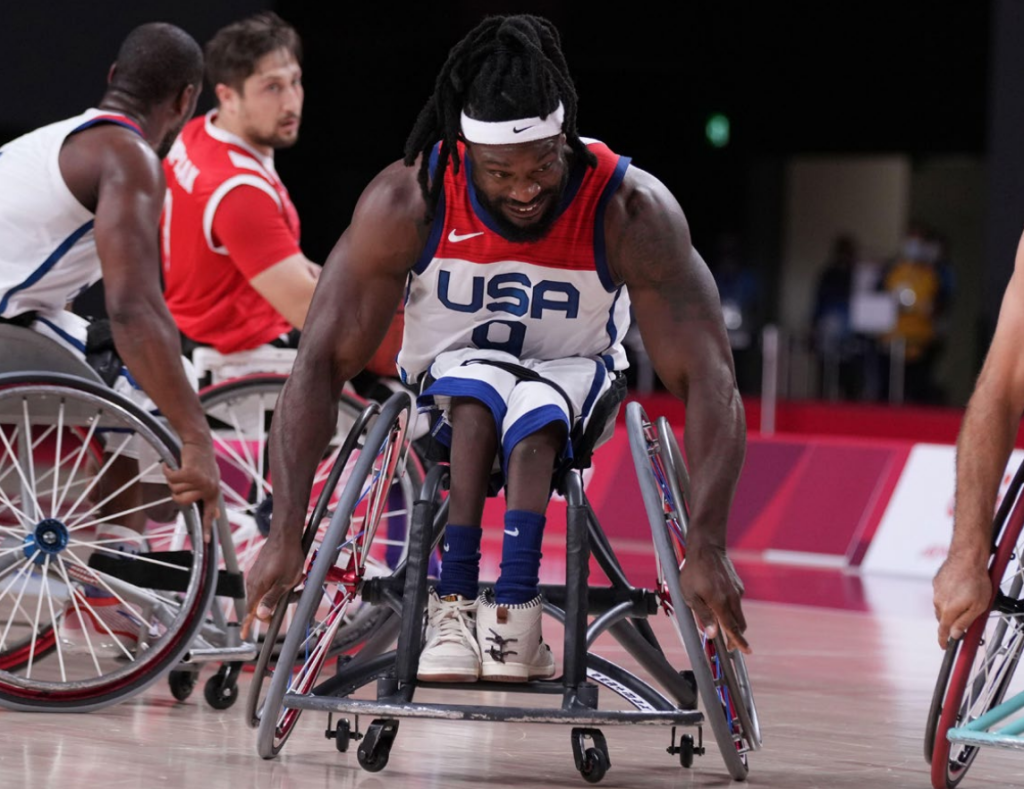
Activity: Story, “Matt Scott, Paralympic Wheelchair Basketball Athlete”
Matt Scott was born in Detroit, Michigan, USA, with a birth defect called Spina Bifida, a condition in which the baby’s spinal cord does not fully develop. This left him paralyzed from the waist down. He later had both feet amputated. He was fitted with a wheelchair at an early age and learned how to navigate his school and community.
Matt said that people with disabilities face adversity. Many people look only at the limitations, saying a person in a wheelchair has no options in sports, but Matt began playing wheelchair basketball when he was fourteen years old. He was recruited by the United States Men’s National Wheelchair Basketball Team directly out of high school. He also played in college at the University of Wisconsin, while earning a B.A. in Sociology. He is married and has two children.
Matt has competed in every summer Paralympic Game since high school graduation. He and his team steadily improved, moving from a 7th place finish in 2004 to a bronze medal in 2012 in London, a gold medal in 2016 in Rio, and a gold medal in 2020 in Tokyo. Matt made his debut as a reporter for NBC Universal’s coverage of the 2024 Paris Summer Paralympic Games. Matt is known for his commitment, persistence, and discipline. He advocates for inclusion and universal participation in sports.
Lesson 3 Activity – Additional Business-Focused Resources
Activity – Story: The Journey of Richard Branson and Hiring Neurodiverse Talent
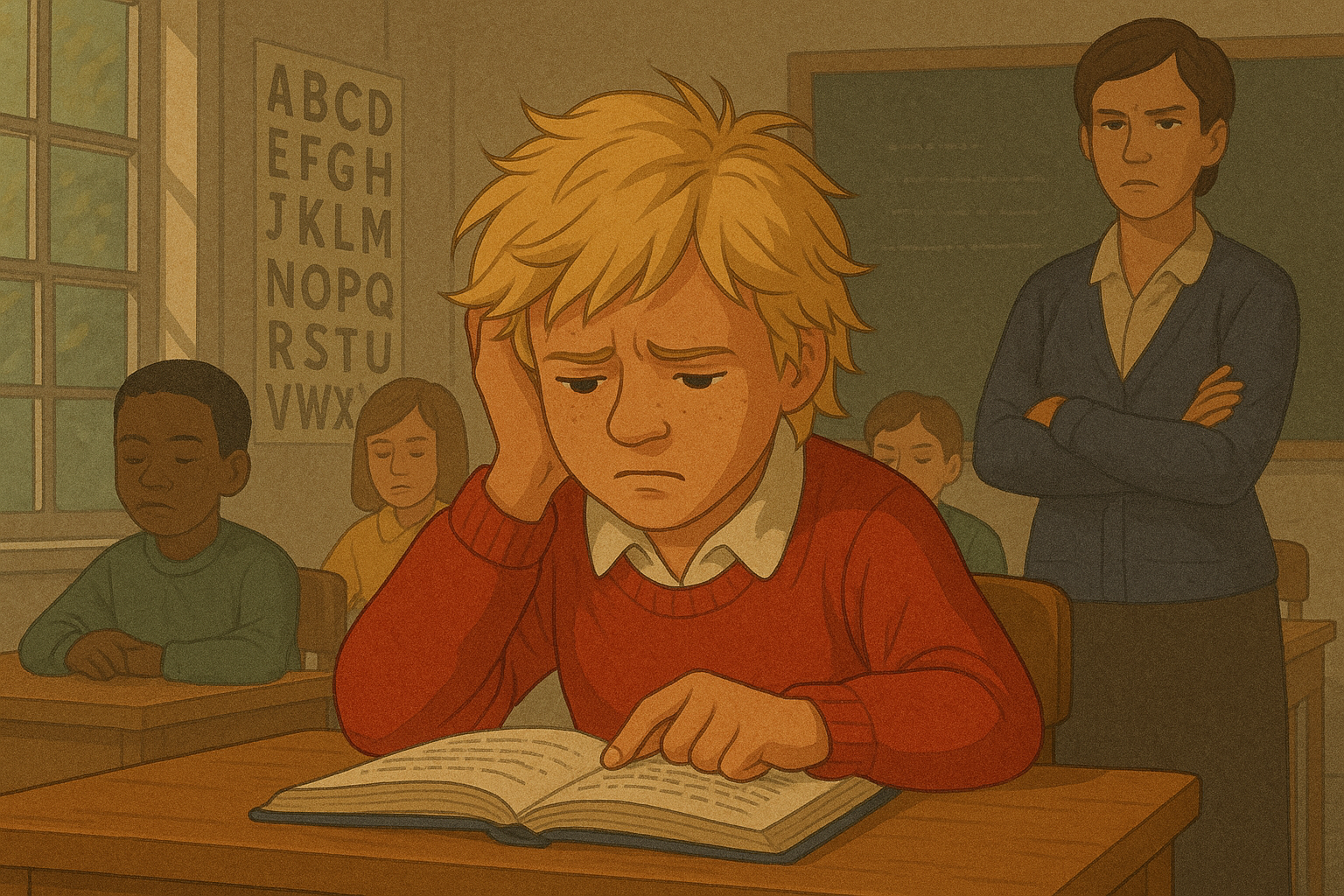
Show the picture below.
Richard Branson, the founder of the Virgin Group in the United Kingdom, is one of the most successful entrepreneurs in the world. But what many people don’t know is that he struggled with dyslexia in school. Reading and writing were hard, and teachers often misunderstood him. Some even called him lazy or said he wouldn’t amount to much.
Instead of giving up, Branson used his strength—talking to people and connecting ideas—to build his business. He wasn’t strong at writing memos or reading contracts, but he was amazing at networking. He hired people who had skills he didn’t have, and together they built something great.
Later, as his business grew, Branson made it a point to fight discrimination in the workplace. He believed people with disabilities or learning differences had a place in business—not just out of kindness, but because they often think creatively and solve problems in new ways.
At Virgin, people who might have been excluded elsewhere were given chances. That included people with autism, people with physical disabilities, and others who often faced unfair hiring practices.
Branson also built strong business partnerships by networking with disability advocacy groups and job-training organizations. These partnerships helped him find talented employees and taught his company how to support them.
Branson showed that inclusion isn’t just the right thing to do—it can lead to business success when you build networks of support and respect people’s differences.
https://www.utne.com/community/garment-industry-ze0z1509zcwil
https://auticon.com/blog/sir-richard-branson-behind-jobs-for-autistic-at-auticon/
Questions
- What kind of discrimination did Richard Branson face early in life?
- How did he use his strengths to build a successful business?
- Why is it important for companies to include people with disabilities or learning differences?
Lesson 3 Activity – India
Activity: We are the Best
This activity requires four volunteers. They are instructed to stand in different corners of the classroom. A square is drawn on the floor in the centre, and they are told that within 10 counts, they must all move quickly to stand inside the square. To ensure they fit, both their feet must be inside the square and hold each other tightly to make room for everyone. Once the 10-second countdown is over, they are asked to return to their seats.
The students were asked questions like:
- What do you mean by working together for a common goal?
- Do you understand the loss of discriminating against anyone?
- What challenges have you come across?
- Do you prefer discussing diverse ideologies among your family and friends?
- Are you able to discuss among your peers, family, and community about minimizing discrimination?
- Are you aware of Article 2 of UDHR – “FREEDOM FROM DISCRIMINATION 🡪 You have all the human rights in the Universal Declaration without distinction of any kind, no matter what your race, skin color, sex, language, religion, opinions, family background, social or economic status, birth or nationality.”
The outcome of this activity reflects on equal opportunities for everyone regardless of their gender, caste, religion, region, language, etc.
Lesson 3 Activity – India
Activity: Story, Kuttan – A Journey for Transformation
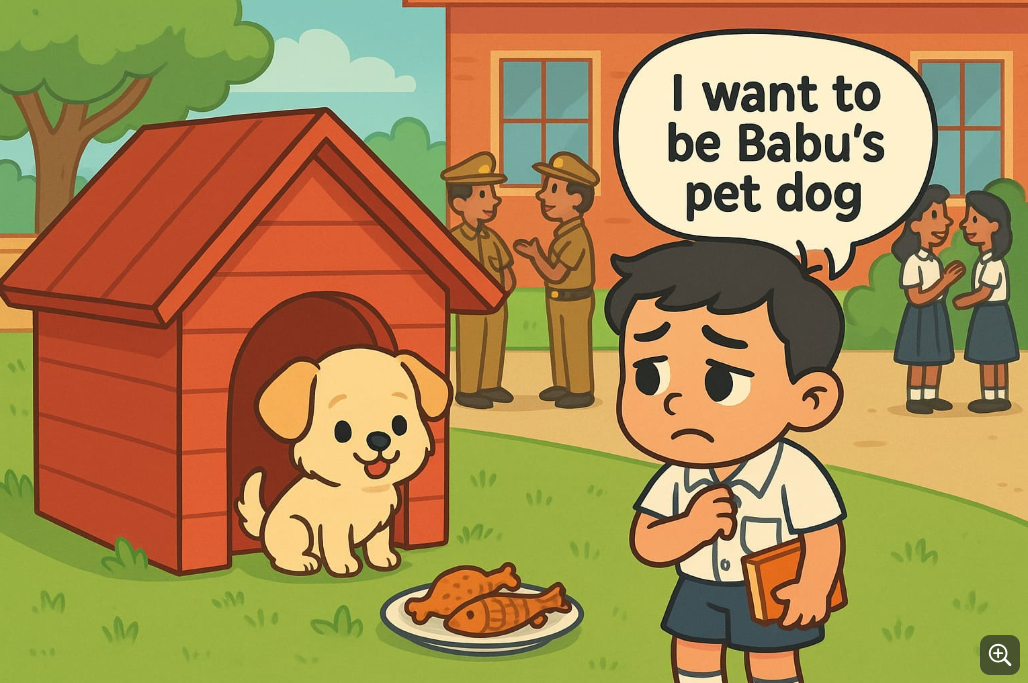
There was a boy named Kuttan, born in Kerala. He was a bright student, but too poor to afford his necessities. One day, he told his friend Babu that he wanted to visit his house because Babu belonged to an elite family and had a big house. Babu agreed to invite him on Sunday, as no one else would be home. He did this because Kuttan came from a Dalit background.
When Kuttan visited, he noticed a pet house and a dog in it. In front of the dog, there was a plate containing fried chicken and fish. A few days later, some officers visited the school. They asked the students about their aspirations. Some said they wanted to be doctors, singers, dancers, or actors. When Kuttan was asked, he said he wanted to be Babu’s pet dog. When asked why, he replied that at least the dog gets three meals a day. This statement shocked the school authorities and the staff. They decided to help him. His classmates gave him books, and he received mentorship and guidance. Kuttan worked hard and became the topper in his school for both the 10th and 12th grades. He completed his undergraduate and postgraduate studies in Kerala, later studying in Delhi and eventually securing a scholarship to study in London.
When he was returning from London, the principal of the university handed him a letter and asked him to deliver it to the Prime Minister of India. Pt. Jawaharlal Nehru, the then Prime Minister, read the letter, which stated that this student had great potential to be a leader and should not have his talent wasted as a mere college professor. Kuttan became a professor for a while but eventually entered politics. He went on to become an MP and an MLA.
In 1997, history was made when Kuttan, known as Dr. K. R. Narayanan, became the 10th President of India and the first Dalit President in the country’s history. His journey lifted the curtains for those from disadvantaged backgrounds, demonstrating that they could rise to the platform of being the First citizen of India.
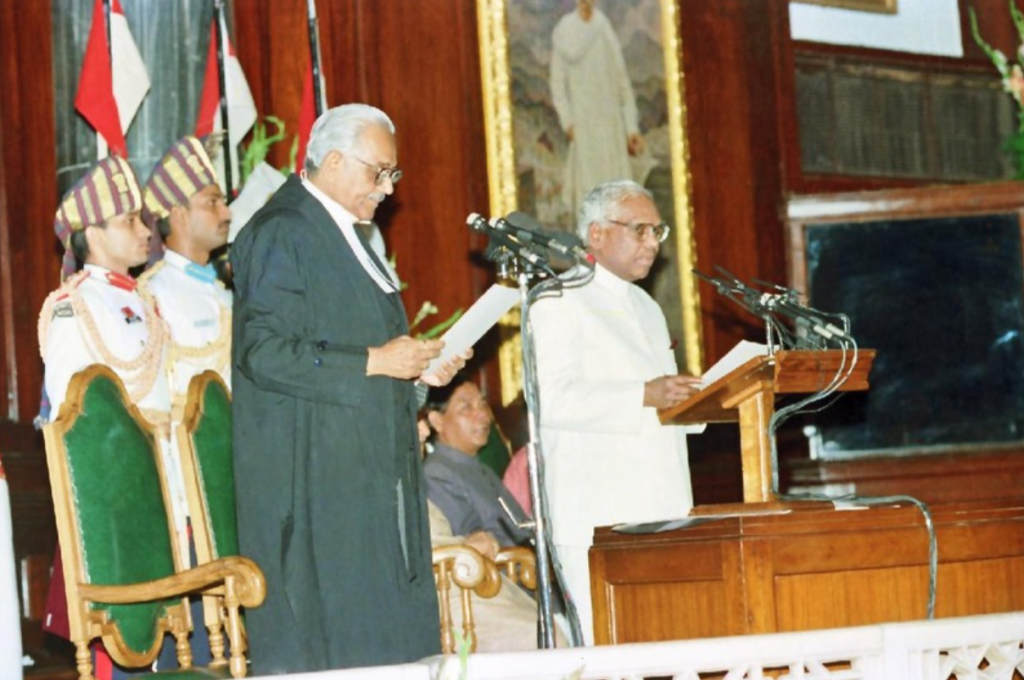
Dr. K. R. Narayanan was the 10th President of India and the first Dalit to hold the office. He was known for his integrity, scholarship, and commitment to social justice.
Lesson 3 Activity – India
Activity: Equality Walk
Materials: Character cards
“Equality Walk” helps students experience social inequality by taking on hidden roles. As different life scenarios are read aloud, students step forward or backward based on how their character would be affected. This silent movement reveals visible gaps in privilege. A short reflection follows, linking the experience to Articles 14, 15, and 17 of the Indian Constitution.
International figures
1. B. R. Ambedkar
2. Martin Luther Jr. King
3. Tim Cook
4. Mother Teresa
Situations
1. Step backward if your character faces judgment because of skin color, accent, or clothing.
2. Step forward if your character has access to clean drinking water at home.
3. Step forward if your character can afford to attend college.
4. Step forward if your character can wear clothes of their choice without judgment.
5. Step backward if your character is often stereotyped or made fun of.
Lesson 3 Activity – India, Additional Activities
Activity: Same on the Inside
Objective: To show that even if we look different, we are all human.
Materials Needed: A brown egg and a white egg
Steps:
1. Show students: Inside, they’re exactly the same.
2. Show the two eggs to the class and ask: Are they different?
3. Crack both eggs in a bowl.
We may look different, but we are all equal. Discrimination based on looks, gender, religion, or background is unfair.
Lesson 3 Activity – India, Additional Activities
Activity: Label Me Not
Objective: To understand how labels and stereotypes hurt and why it’s important to treat people as individuals.
Materials Needed: Sticky Notes
Steps:
1. Write common labels on sticky notes (e.g., “weak,” “smart,” “poor,” “loud,” “lazy”).
2. Stick them randomly on students’ backs without telling them what the label says.
3. Ask students to walk around and treat others based on their label. Then reveal the labels.
Questions
- How did it feel to be treated a certain way without knowing why?
- Why do people judge others by labels in real life?
Lesson 3A Activity – Colega Primary Manual
Activity: Story “The Present”
Read the story and show the picture.
“Once there was a boy who spent a lot of time playing games by himself inside the house. One day his mother gave him a box with a present inside that she hoped might help him want to play outside more. The boy opened the box and saw a puppy inside, but the puppy was missing part of his front leg. The boy put the puppy down on the floor and sighed. He was disappointed by the puppy’s missing leg and assumed he couldn’t have fun like other puppies.
Just then the puppy stood up and crossed the room with some difficulty to grab a ball that was on the floor. The puppy ran and played with the ball. The puppy, sometimes tripping and falling, made his way back to drop the ball in front of the boy, hoping to play with him. The boy was very surprised. The puppy could run, play and have fun, even though he was missing part of his leg.
Slowly the boy’s feelings changed as he watched the puppy play with the ball. The boy smiled and decided to play with his new friend after all. He reached down, put the ball in his pocket and grabbed his crutches. He was missing one part of his leg also. He called to his mother, “Mom, we’ll be outside playing with our ball.”

Created with Adobe Firefly by Canace Pulfer
(Adapted from “Perfeição,” a comic strip by Fabio Coala.)
Lesson 3A Activity – Colega Secondary Manual
Activity: Story, “My Mother Doesn’t Work”
Zara tells her friend about a typical day for her mother and father: There are sixteen children in our family, but only nine of us are still alive.
My mother gets up at four in the morning, fetches water and wood, makes the fire, and cooks breakfast. Then she goes to the river and washes clothes. My father works in the field, about three kilometers away from home. He leaves the house by six in the morning.
After washing the clothes, my mother goes to town where she grinds our corn and buys what we need in the market. When she gets back, she cooks the midday meal. At noon, my mother carries my father’s lunch to him and then goes back home to take care of the chickens and pigs while she looks after my younger brothers and sisters. My mother
prepares supper so that it is ready when all of us get home around six o’clock.
After supper, it takes a while to get everything cleaned up, but my mother usually gets to bed at about nine o’clock. My father is already asleep by then.
(Adapted from First Steps: A Manual for Starting Human Rights Education, Amnesty International 2001. Peer Education Edition, p. 63.)
Questions
- Who works in the family?
- Why might someone say that Zara’s mother doesn’t work?
- What were some of her daily tasks?
- Could those only be done by a woman?
- Why is the work she does sometimes not recognized?
- How are the women and men in our communities and families treated differently?
- Could this be considered discrimination?
- If this is discrimination, what can we do to decrease this in our families or communities?
- What other kinds of discrimination are there? Discuss other examples of discrimination listed in Article 2, such as age, race, religion, and language. There are many different kinds of discrimination.
Lesson 3A Activity – Colega Secondary Manual
Activity: Does It Fit?
Write the list of words on the board in two columns or on small pieces of paper in two separate stacks.
| Column 1 | Column 2 |
| Black | Superhero |
| Female | Scientist |
| Poor | Leader |
| Talented | Teacher |
| Caring | Writer |
| Peaceful | Muslim |
| African | President |
| Male | Athlete |
| Christian | Celebrity |
- Have a student pick a word from each list or draw a word from each pile, and read them to the class.
- Do the two words fit together? Why or why not?
- What does this activity show us about discrimination? (There is no discrimination in the list.)
Last updated: 05/01/26