

Lesson 2A Activity – Global Version
Activity: Story, “The Old Man and His Sons”
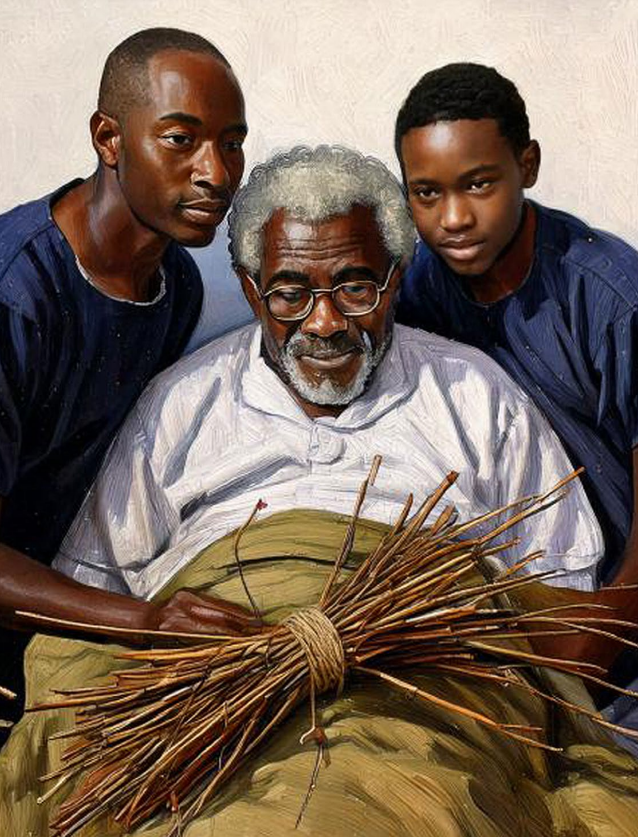
An old man had some sons who constantly quarreled. As he was about to die, the father called his sons together and asked them to bring him a bunch of sticks. He tied the sticks into a bundle and asked each son to break the sticks in half. They tried with all their strength, but each son failed. Next, he untied the bundle, handed each son a stick, and asked him to break it. Each son could break his stick easily. “You see my meaning?” he said. “We are stronger when we work together than we are alone.”
Questions
- What caused the old man to worry about his sons?
- What made it easier to break the sticks?
- What do you think the father was trying to teach his sons before he died? (Unity brings strength. We all want to be safe, happy, and fulfilled. For this to happen, we need to treat each other with respect and work together.)
- What does the cord represent that bound the sticks together?
- How can rules or human rights help us live together peacefully?
- If you had problems in your community or at home, how would you begin to solve them?
“Never underestimate the power of a small group of committed people to change the world. In fact, it is the only thing that ever has.” – Margaret Mead, Cultural Anthropologist
Questions
- What does the word committed mean?
- What do you think Margaret Mead means?
- Is it easier to make a change for the better by yourself or with others?
- What are some ways that you see people collaborating to help others in your school, family, or neighborhood?
Lesson 2 Activity – Additional Business-Focused Resources
Activity – Story: Kalpona Akter Standing Up for Workers
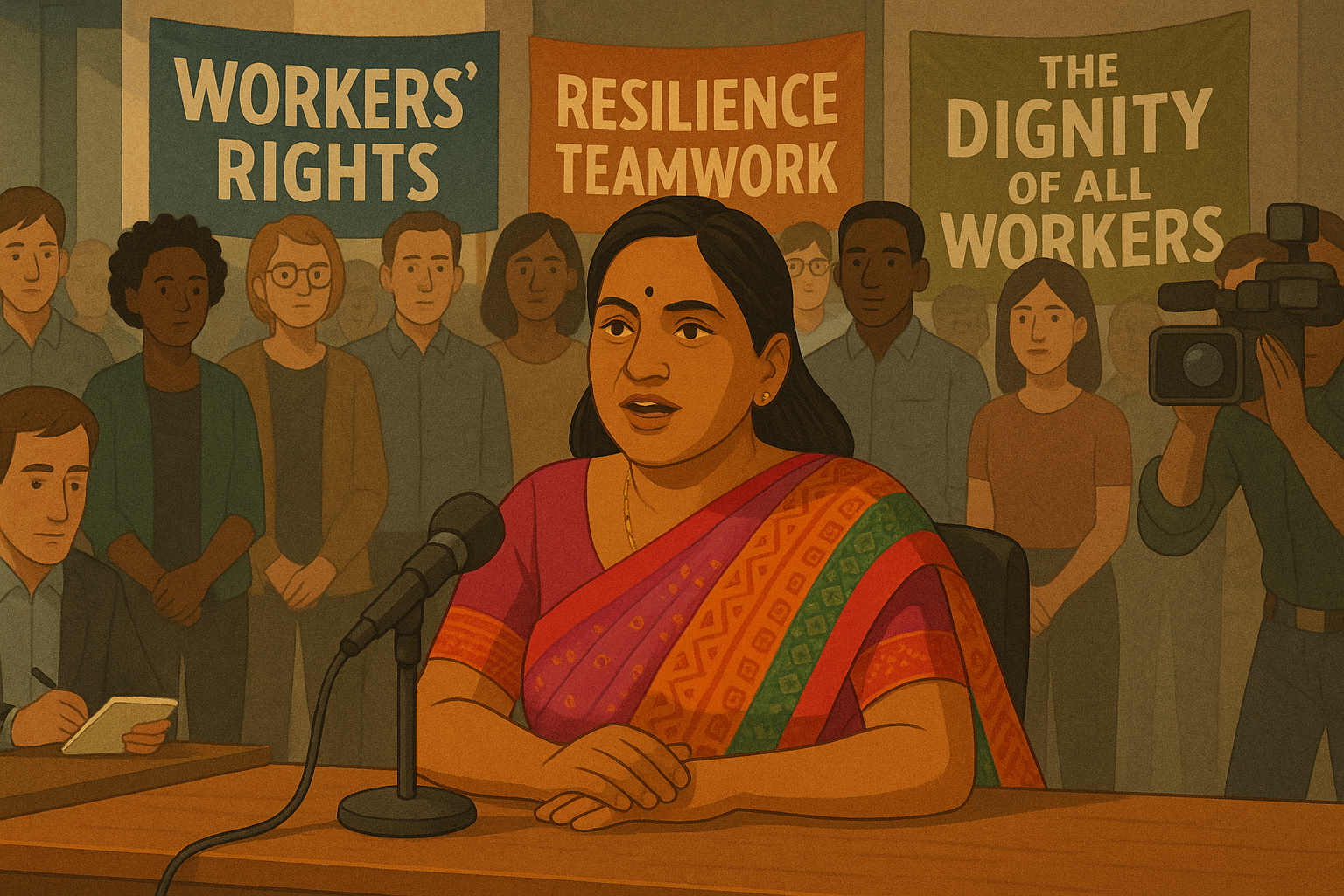
Show the picture below.
Kalpona Akter was only 12 years old when she started working in a clothing factory in Bangladesh. Her family was poor, and when her father got sick, she had to leave school and help earn money.
In the factory, Kalpona and other workers—some of them young girls and boys—worked long hours for very low pay. The building was hot and crowded, and the bosses would sometimes yell or even threaten workers who spoke up. There were no breaks, and if you complained, you could lose your job.
Even though she was young, Kalpona knew this wasn’t fair. She started learning about workers’ rights and began talking to others in the factory. She helped organize meetings and even a strike, where the workers refused to work until things got better. But she was punished—fired, blacklisted from other jobs, and even arrested.
Still, Kalpona didn’t give up. She helped start a group called the Bangladesh Center for Worker Solidarity, which teaches workers about their rights and helps them speak up safely. After a terrible factory accident in 2013, when a building collapsed and over 1,100 people died, Kalpona worked with people from other countries, big companies, and human rights groups to demand safer conditions in Bangladesh’s factories.
Today, Kalpona is a global leader who helps make sure workers around the world are treated with dignity, respected, and safe—no matter what job they do or where they live.
To learn more, see https://www.hrw.org/news/2016/09/01/kalpona-akter-bangladesh
https://www.utne.com/community/garment-industry-ze0z1509zcwil/
Questions
Invite students to gather in small groups and each take a turn answering one question. Encourage them to practice active listening.
- Why do you think active listening is important for leaders in a workplace?
- What basic rights were missing for Kalpona and the other factory workers?
- What does it mean for rights to be “inalienable”? Do you think these workers were treated as if their rights were inalienable?
- How did collaboration help Kalpona fight for workers’ rights?
- Who were some of the people or groups she worked with? Why couldn’t she do it alone?
- How can people in businesses—managers, workers, and customers—work together to make sure everyone is treated fairly?
Lesson 2 Activity – India
Activity: Social Diversity
The teacher conducts a mind mapping activity by writing the central idea, “Social Diversity,” on the board. Students can then contribute by answering the following questions:
Discussion:
- What do you understand by the term ‘social diversity’?
- Can you recall an instance where you encountered such diversity in your society?
- What are some examples of social diversity you observe in India?
- Are there any laws in the Indian Constitution that protect this diversity?
The discussion leads to the understanding of the need of human rights acting as a source of protection for the human rights. Along with helping the students appreciate the value of inclusion and respect for diverse social groups.
Lesson 2 Activity – India
Activity: Inalienable Rights
Provide the students with flashcards and ask them to write about one thing (an object or an abstract concept) that they would not appreciate being taken away from them, and explain why. After they write down their responses, invite a few students to share their answers with the class.
After the activity, the teacher explain that just like in real life, we have certain things that are important to us and we wouldn’t like them tampered with, we also have something called human rights that can never be taken from us. These rights help us live with dignity and freedom, regardless of our background. These fundamental human rights are called ‘Equal and Inalienable Human Rights.’
Lesson 2 Activity – India
Activity: The Student Manifesto
Step 1 : Context Setting (3 min)
The teacher sets the context of this particular human right-
Every person in the world has got rights just because they are human. This is why we say the human rights are universal. These rights are equal and cannot be taken away. We shall now understand this concept through a group activity:
Step 2 : Group Formation (2 min)
- Divide the class into groups of 4–5 children.
- Give each group a worksheet with:
- Group Name:
- Prioritized rights (From the Table of Rights given below):
- Reason behind the selection of particular rights:
- Examples (Instances where the rights were respected or denied):
- Create a slogan:
TABLE OF RIGHTS
- Right to Equality
- Right to Education
- Right to Freedom from Bullying (Right to Life, Liberty and Security)
- Right to Freedom of Religion
- Right to Freedom from Discrimination
- Right to Protection from Child Labour (Right to Work and Fair Pay)
- Right to Legal Recognition
- Right to freedom of Expression
- Equal and Inalienable Rights
Step 3 : Presentation (15min)
Each group shall come forward and share their chosen rights, reasons, examples, and slogan with the class.
Lesson 2 Activity – India
Activity – Story: The Ink of Equality
In a small army town called Mhow, a child named Bhim was born in 1891. Bhim was bright, curious, and full of questions. But the world around him had rules that tried to stop him from learning. Because he belonged to a Dalit community, he was told he could not sit inside the classroom, touch the water pot, or even read the same books as others.
Still, Bhim wanted to learn. He would sit outside the school on a gunny sack and listen carefully. His hunger for education was stronger than the discrimination he faced. With courage and hard work, he studied in India and went on to study in America and England, becoming one of the most educated Indians of his time.
But Bhim knew that his success was not enough—many children like him were still being denied educational rights and their right to be treated with dignity. So he began to fight—not with weapons, but with books, speeches, and powerful ideas. He believed that every person, no matter what caste or background, had equal and inalienable rights—including the right to learn, the right to speak their language, and the right to express their culture without fear or shame.
He argued that true freedom meant the right to education, the right to preserve one’s culture, and the right to be treated equally under the law. As the chief architect of the Indian Constitution, he made sure these rights were protected for every citizen.
Thanks to Dr. Ambedkar, today every child in India has the right to go to school, to read and write in their mother tongue, and to proudly practice their culture. His life reminds us that knowledge is power, and justice is possible when we believe in equality for all.
Lesson 2 Activity – India, Additional Activities
Activity: Doomsday – Justice Served
Different roles:
CITIZENS: Act out the situations
LAWYERS: They are given rights and the related article
JUDGES: Shall proclaim the final verdict
The class is divided into citizens , lawyers and judges by casting lot. The students who get to be citizens are then given certain scenarios where human rights are violated . The citizens would act out the scenarios and the lawyers would proclaim if the fundamental rights are violated i.e. which right was violated and according to which article of the Indian constitution (here the students would refer to the flash cards). Then the judges of the class would produce the final verdict that is either ‘the citizen is guilty of violating the right’ or ‘the citizen is not guilty of violating the right’.
Lesson 2 Activity – India, Additional Activities
Activity: Everyone Gets a Passport!
Goal: To help students understand that everyone has equal and inalienable rights, no matter who they are.
You Will Need: Plain paper (to make a passport), Crayons or pens, A few printed pictures or cards with basic rights (e.g. Right to Education, Right to Speak, Right to Be Treated Fairly)
Steps:
1. Make a Passport:
Ask each student to fold a paper like a booklet. On the front, they write “My Rights Passport” and draw themselves.
2. Give Roles (Optional):
You can give each child a simple role (like a poor child, a rich child, a girl, a refugee, etc.), or just ask them to imagine they are different people.
3. Distribute Rights (Unfairly at First):
As you read out each right, give the “right stamp” or card only to some students. For example, only boys or only rich children.
4. Ask Questions:
How did it feel not to get the same rights? Was it fair? Should everyone have the same rights?
5. Now Make It Fair:
Restart and give all rights to all students, showing that rights are for everyone.
6. Final Message:
Tell them: “Everyone is born with equal and inalienable rights. No one can take them away from you. Rights belong to everyone—no matter where they live, how they look, or what they have.”
Lesson 2A Activity – Colega Primary Manual
Activity: Story – Amari and Mwaki
Discuss the questions that are at the end of each part of
the story.
Part 1
I’m going to tell you a story about Amari who wanted to have a dog. Every day he asked his father and mother over and over if he could have a dog. “A dog could guard our compound at night,” Amari said. “And he could help keep Mama’s goats from running away.” The goats were very valuable. Mama sold their milk and cheese and meat and hides at the outdoor market. She used some of the money to help pay for the children’s school fees.
Finally, Amari’s parents said, “Yes, you can have a dog — but you must take care of him.” Amari felt happy, and he named his dog Mwaki. Amari and Mwaki the dog were best friends.
Questions
Remember to raise your hand for the Talking Stick.
- What do you think Amari needed for his dog? Food, water, shelter, love.
- Who would make certain that Mwaki had these things?
Part 2
Every day after Amari went to school, Mama took Mwaki the dog to help her with their small herd of goats. When school was over, Amari would meet Mama in the field so that he and Mwaki could herd their goats safely back to the compound. “What a good dog,” said Mama. But Father sometimes thought it cost too much money to feed the dog and take care of him. One night as the family lay sleeping, Mwaki heard the soft sounds of a wildcat as it crept up to the goat pen. “Woof, woof! Woof, woof!” barked Mwaki as loud as he could. Amari’s father jumped out of bed and chased the wildcat away before he could eat any of the goats. “Good dog!” said Amari’s father.
Questions
- Do you think Mwaki the dog has a right to things like food, water and shelter?
- Who can tell me which rights we need, too? All of them are rights we need.
Lesson 2A Activity – Colega Primary Manual
Activity: Guess My Pet
Question
- Who would like to pantomime (act out) the pet you would choose?
Allow a few students to pantomime their pet while the rest of the class tries to guess the animal. When the class guesses correctly, ask them: What does this pet need?
Lesson 2B Activity – Colega Primary Manual
Activity: Pets
On the chalkboard or large piece of paper, draw two columns. Explain that we need a name for our class and an animal for a class pet for today.
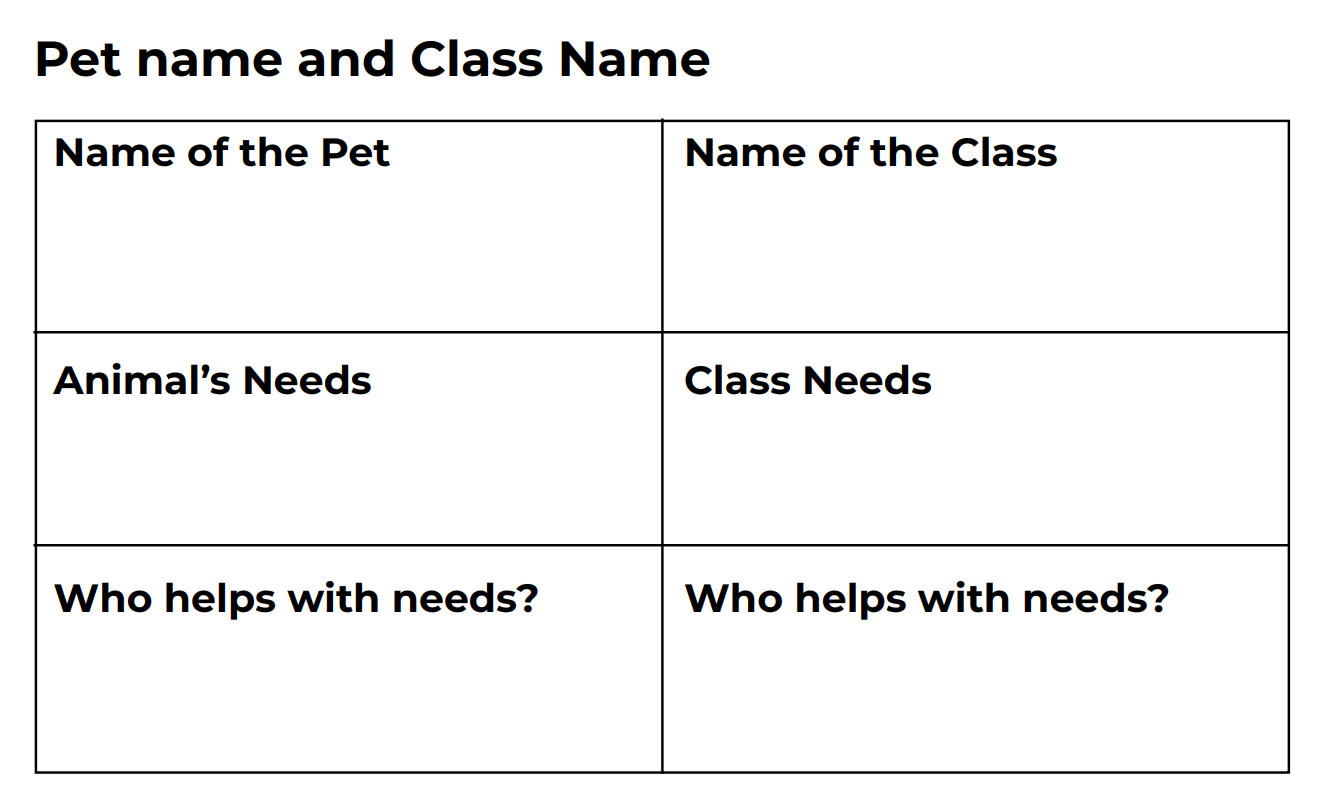
Talk with the students about animals that they might want as pets.
- List their choices on the chalkboard or paper.
- Do the same with class names, such as Thunderbolts, Stars, etc.
- And then again with pet names, such as Tippy, Boomer, Nacho, etc.
Allow the students to decide on the final name for the class and the pet.
Lesson 2B Activity – Colega Primary Manual
Activity: Line Up!
Let’s practice helping each other.
- Divide the students into teams of five or six or more.
- Tell the students that when you say “Go!” you want them to line up from shortest to tallest.
- Explain that as soon as their team is finished, they should all hold up their hands.
- Give the “Go!” signal, and allow the students to finish. Have them check the order as a group.
Questions
- How were you able to make your lines so quickly?
- Working together.
- Did you feel safe?
- Did you trust each other?
- How did you feel when you got in the right order?
Last updated: 05/26/26